
(Editor’s Note: This is Part 2 of a five-part series, featuring the top five rookie campaigns from each decade over the first 30 years of the WNBA)
Was there a more exciting decade than the 2000s, when it came to WNBA rookie classes?
While the WNBA was trying to carve its way into the professional sports buffet, albeit like sawing wood with a butter knife, sports fans of other leagues were partying like it was 1999.
Yet there was a big fear with the WNBA, as questions about the league remained in place.
Will there be sustained interest? Will more fans join the current ones?
Most importantly, will there be more stars?
Thankfully, the basketball Gods shone upon us and gave us a plethora.
Whether or not sports fans were ready to accept women’s basketball, the stars who began sculpting the WNBA painted a clear picture of just how talented college players were by the time they graduated.
With the amount of star power that was splashing the league every Spring, there was a belief that there was staying power, that the pipeline was primed, and there would be additional talent that was getting better exponentially.
And at this point, the league wasn’t relying on very many foreign players, as it was predominantly domestic. Thanks to NCAA powerhouses like UConn and Tennessee, it quickly became apparent that women’s basketball at the WNBA level could sustain.
Week 2: THE 2000s
All five of this week’s selections earned Rookie of the Year honors and should deservedly receive credit for helping lay the WNBA’s foundation.
Even for newer WNBA fans who recently jumped on the bandwagon, three of the names should sound familiar, as each of those players retired in each of the last three seasons.
Here is our 2000s’ top five rookies:
1. CANDACE PARKER, Los Angeles Sparks (2008)
There’s a legitimate argument that Parker had the greatest rookie season in WNBA history, a point we’ll make in a few weeks. A stretch four who had the tools of a guard, Parker gave us the first glimpse of someone her size who could rip and run. Fresh out of Tennessee and from under the Pat Summitt umbrella, we hadn’t seen many people in college, let alone the WNBA, utilize her quick-trigger muscles to cut toward the basket after receiving a pass with deliberate intention to score before the defense could even set up. And this was someone who had dunked at Tennessee, and eventually, during her rookie campaign.
Parker had a keen ability to command the offense like nobody we had seen, yet. Coaches, teammates, analysts and fans couldn’t wait to see what she would do with the basketball. All eyes were glued to Parker in case she had a one-handed flush in mind. From the moment Parker entered the league, she grabbed the audience by the shirt collar. In 2008, Parker averaged 18.5 points, 9.5 rebounds and 3.4 assists, led the league in rebounding and double-doubles, and led all rookies in scoring and blocks. She’s still the only player in WNBA history to win Rookie of the Year and MVP in the same season.
2. DIANA TAURASI, Phoenix Mercury (2004)
There’s a reason many people believe Taurasi’s image is the silhouette embedded in the league’s vertical orange logo. Her extensive career that earned the moniker GOAT began with a splash in her rookie season. The first-overall pick in 2004, Taurasi came into the WNBA talking the talk and backing it up. The three-time National Champion out of UConn was a pro-ready from Day 1 for a shooting guard as you’re going to get. Playing for Geno Auriemma had her ready to carry the load more than anyone else we had seen fresh out of college. Certainly more so than any other UConn product, as Auriemma was building his factory.
Though she wasn’t named an All-Star in her rookie campaign – a smaller pool made it difficult to earn a nomination as a rookie – she represented the US Olympic team in Athens and helped Team USA earn gold that summer. Taurasi, who averaged 17.0 points, 4.4 rebounds and 3.9 assists per game, was still unstoppable in her first season and quickly made a name for herself. It was the first time analysts began comparing a WNBA player to an NBA player. Everything looked effortless for her, as her growth as a rookie and collectively over her first two years as a professional honed her skills and prepared her for a pairing with Cappie Pondexter. They eventually formed one of the most lethal offensive duos we’d ever see.
3. TAMIKA CATCHINGS, Indiana Fever (2002)
With the league just turning six, there were a handful of two-way players who complemented their strong suit with stellar play at the opposite end. Catchings, however, became the first player asked to carry the offensive and defensive loads. Catchings seemed tireless in doing it. She may have been the most complete two-way rookie the WNBA had seen to that point, as it wasn’t her rookie impact for the Fever she offered; it was a superstar’s impact. Her energy was unmatched. If Parker entered the WNBA looking like the most gifted player on the floor, then it was Catchings who entered looking like the player you absolutely did not want to compete against for 40 minutes.
And what made her rookie season even more impressive was she was coming off a torn ACL suffered during her senior season at Tennessee and had missed the entire 2001 WNBA season rehabbing. She was technically a second-year player but played her rookie campaign in 2002, when she averaged 18.6 points, 8.6 rebounds and 2.9 steals per game en route to winning Rookie of the Year. Her basketball IQ grew while sitting out the 2001 season, absorbing the game like a sponge. Scoring, rebounding, defending multiple positions, forcing turnovers, handling the ball, creating hustle plays that could change possessions and the complexion of a game, Catchings became the prototype for one of the greatest players we’d ever see down the road in Maya Moore.
Olivia Miles has scored in double figures in 5 straight games to start the season
This is the longest streak by a Minnesota Lynx rookie since Seimone Augustus in 2006. pic.twitter.com/EeN5MOmBfS
— ESPN Insights (@ESPNInsights) May 22, 2026

4. SEIMONE AUGUSTUS, Minnesota Lynx (2006)
Augustus opened eyes with her slick maneuvering, as she could manipulate the dribble drive or the step back, and did it with such swag and effortlessness. Augustus strolled into the WNBA with a professional scorer’s mentality already fully developed, and brought a Rucker Park vibe with her because she was just so cool about her approach. And that baffled some, as this was someone from the country, born in Baton Rouge, Louisiana, and seemingly fed from birth with humble pie. That said, her kindness stopped at the baseline, as she was deadly once she stepped on the court. If there was somebody who had basketball in her blood, Augustus showed us the lab reports.
As a rookie, Augustus averaged 21.9 points per game, finished second in the league in scoring, and made the All-Star team en route to winning Rookie of the Year. Her 21.9 scoring average set the WNBA rookie record. Augustus’ excellence with the basketball in her hand never wavered, and she never showed fear with the shot clock winding down. Be it a step-back jumper, a step-through or a Euro step, we were witnessing Augustus do things before anybody else. A student of the game, she strengthened a genetic code laced with basketball rhythm by watching other players – in the W or the NBA – and also internationally, and then taking snippets of their game to build her own style. Augustus epitomized work ethic away from games, practicing and perfecting her skills. But when she checked into a game, it was amazing to see how easy she made difficult shots look.
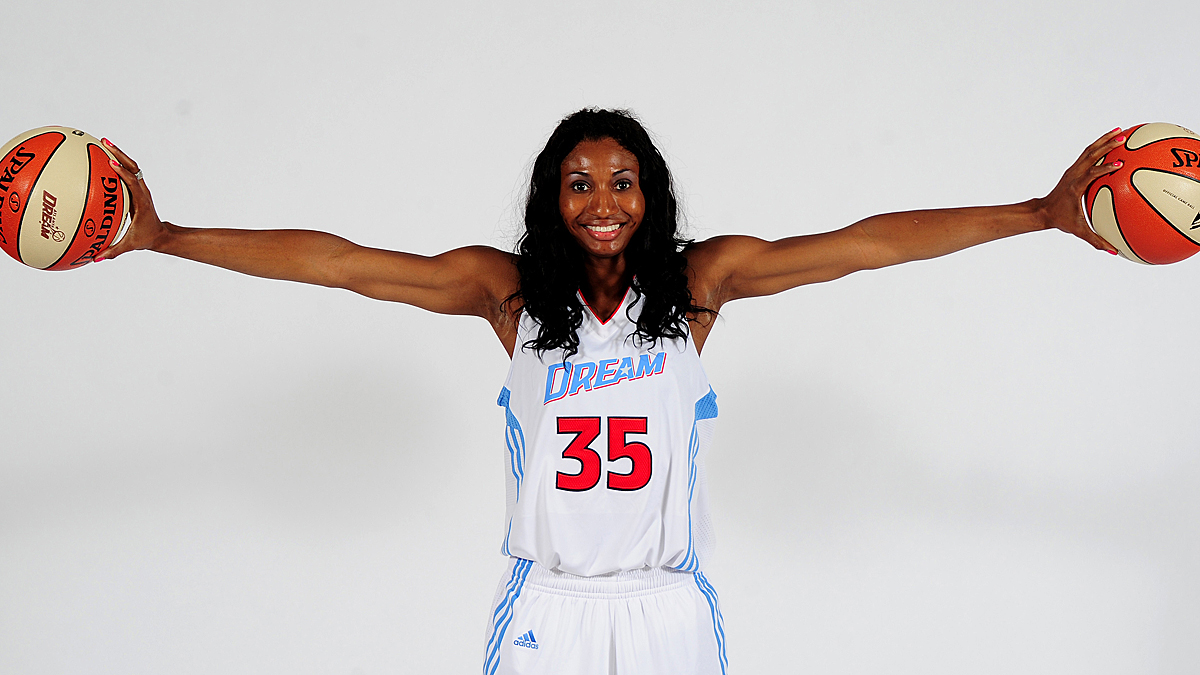
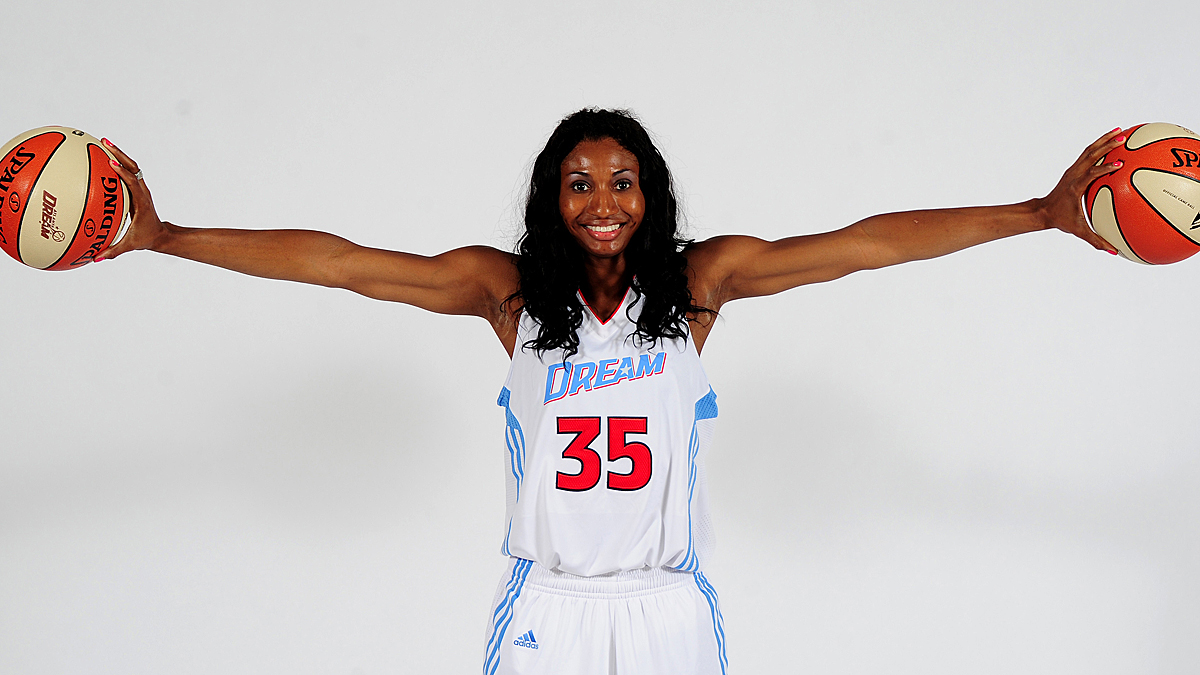
5. ANGEL MCCOUGHTRY, Atlanta Dream (2009)
The top four in this list all had unique and uncanny intangibles that helped them enter the league with eye-opening impacts. In 2009, the world quickly learned about attacking instinct, something McCoughtry had perfected while putting Louisville on the map and leading the Cardinals to their first Final Four. While her season numbers didn’t tell her story – 12.8 points, 3.1 rebounds and 2.1 assists per game – she also didn’t start the season as Atlanta’s offensive centerpiece. She had so much bravado that it took the Dream a minute to catch up to her, and she eventually became the team’s go-to attacker. And as the season progressed, the team’s confidence in her grew. The 2009 Rookie of the Year exuded positive aggression, which is probably why the Dream chose her No. 1 overall in the draft.
Name the situation, and McCoughtry’s answer was one thing: ATTACK! She didn’t believe in passivity, as it belonged nowhere near her basketball vocabulary, evidenced by her long, violent first stride that humiliated any defender who engaged her. It was highly unusual for a rookie to exemplify that quality, as they generally spend the first part of their debut campaign trying to figure out where they are and how to impose themselves. McCoughtry didn’t need to figure out anything and imposed her will on everyone. It was her assassin-like mentality that turned her into one of the league’s most dangerous scorers.
Editor’s Pick

The post Ranking the WNBA's Best Ever Rookie Seasons (2000s, 2 of 5) appeared first on Ballislife.com.