

Who’s the best in the West? The first half of this WNBA season has offered plenty of contenders.
Halftime beyond halftime has come and gone in the WNBA’s 30th season.
With the All-Star Game festivities in Chicago completed, a scintillating second half no doubt awaits on the hardwood road ahead. It’ll follow a thrilling opener, one that saw heroines rise and fall, surprises of both the pleasant and disappointing variety emerge, and one that set the tone for a season that could as thrilling as it is historic.
In anticipation of the second half of the season, BIL looks back on the first, grading each of the 15 teams. With the Eastern Conference analyzed, we take a look at the fateful eight out west …
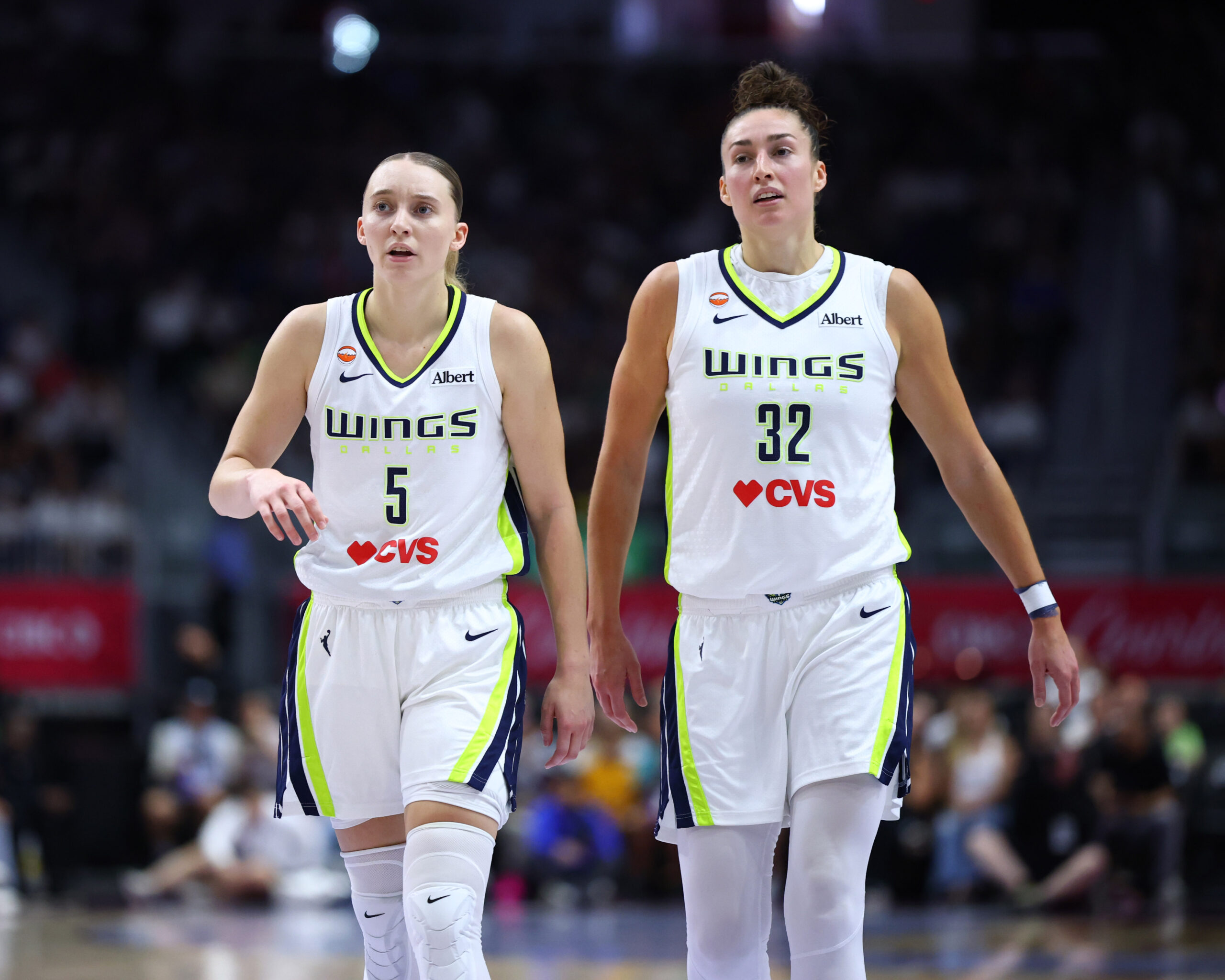
Dallas Wings: A (18-9)
Extreme home makeover Dallas edition is paying off big dividends in the early going.
Anyone remotely associated with Paige Bueckers had to know that the eternal competitor wasn’t going to tolerate a 10-win season. The Wings thus used their top overall choice on fellow UConn alumna Azzi Fudd, heavily invested in the post work of Jessica Shepard and Alanna Smith, and hired Jose Fernandez after years of impressive backcourt work at the University of South Florida.
Jose’s way has let the Wings take flight: Dallas leads one of the most vicious if not sophisticated offenses in the league. No one’s shooting more than Dallas, which is taking just over 72 shots a game, and help is easy to come with a league-best 22.5 assists per game at the break, just about half of those coming the arms of either Bueckers or Shepard.
While Smith has struggled to keep her spot in the rotation from Awak Kuier (injuries certainly haven’t helped), Fudd has rendered a slow start long-forgotten. Becoming the first freshman to win the 3-Point Contest was but an epilogue to a strong stretch, one that has seen her land a lasting place in the starting five. Fudd’s personal success isn’t as vital to her team’s progress as some of her contemporaries but Dallas does boast a 14-6 mark since she entered the opening five, tied for the third-best mark in the league.
The one knock against the Wings is perhaps their flair for the dramatics: half of their wins, including each of the last three, have come by eight points or fewer. But that’s certainly a first-world problem in the grand scheme of things and it’s practically paradise compared to where the Wings stood a year ago.
1st Half MVP: Jessica Shepard
Win or lose, the world knows what it’s getting with Bueckers, who has established herself as one of the most talented backcourt threats in recent memory. Dallas has truly taken flight with the emergence of Shepard, whose continued breakout stands as one of the most pleasant surprise of the 30th campaign.
Throughout a six-year career, flashes of Shepard’s potential were present amidst interruptions brought about by injuries and international commitments. They culminated with a third-place posting in last year’s vote for top sixth woman but Shepard has rewarded the faith Dallas showed in her fortyfold in the first half.
Shepard dethroned Angel Reese as the first half’s top rebounder with a dozen per game, pairing that with 14.9 points to almost double her career-best. Shepard is just the third WNBA player to put up such a statline in her team’s first 27 games, joining Reese and Natalie Williams. Dallas also ranks in the middle of the pack in rebound but is letting up the second-fewest of the offensive variety. Now she has a new top honor to place at the top of her resume, as Shepard was among the ten women to start last weekend’s All-Star Game next to Bueckers.
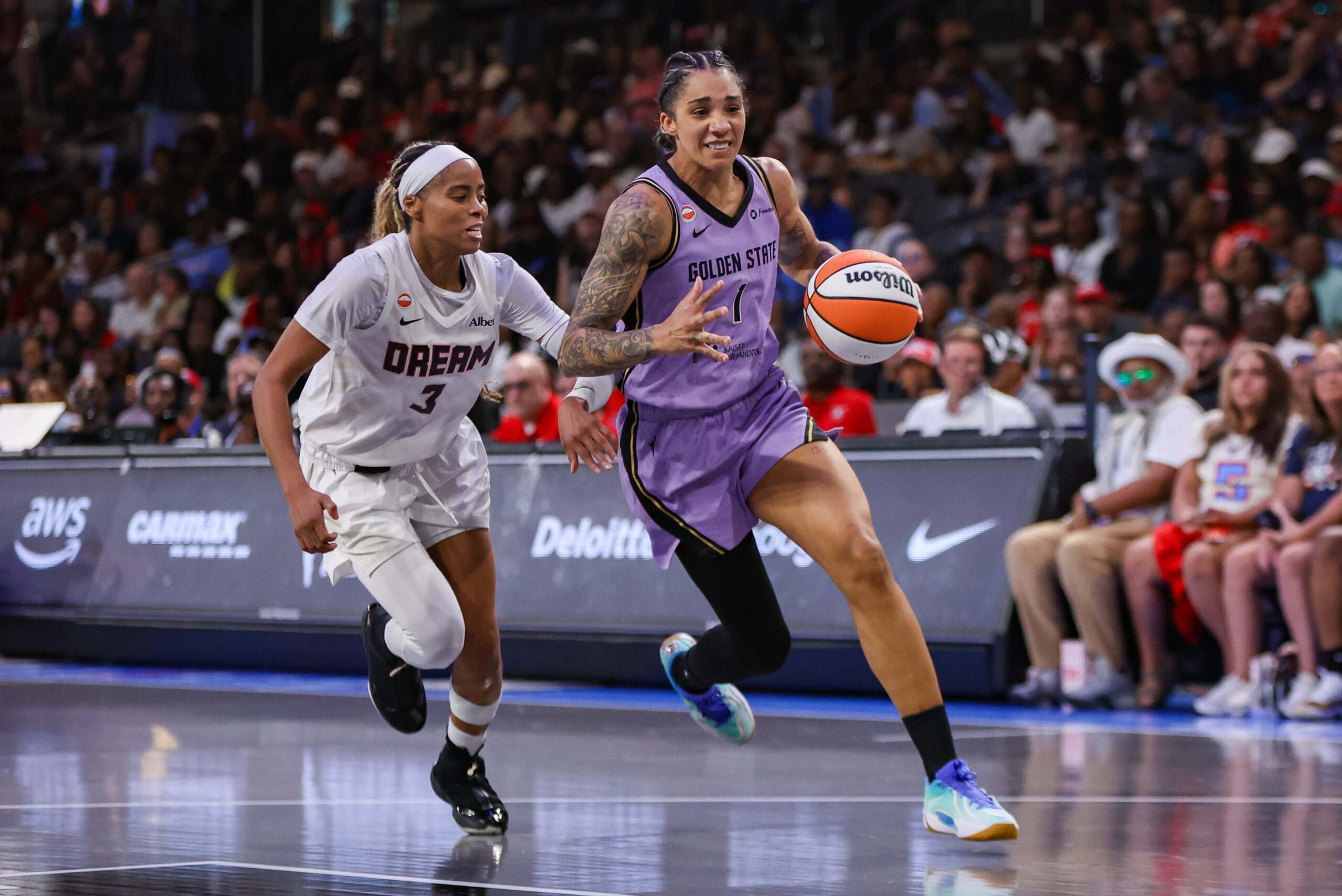
Golden State Valkyries: A— (19-8)
Sophomore slump? The Valkyries have never heard of her.
From a hardwood aesthetic perspective, it’s a good thing the Valkyries hold one of the most electrifying atmospheres in the W, because they force their opponents into ugly basketball.
Since Gabby Williams entered its infantile ledgers, Golden State has posted the best defensive rating in the league (100.9) and is allowing opponents to hit but 42.9% of their tries from the field, second-lowest behind only mighty Minnesota. Even with their own offensive struggles (third-to-last in scoring), the Valkyries have proved their success sustainable by allowing just over 76 a game in the first half, over six points less than their closest competitor … again, Minnesota.
Golden State has somehow managed to turn its status as a walking contradiction into one of the more dominant efforts in the league: despite its supposed struggles in scoring, no team is sinking more threes than the Valkyries, paced by the continued sterling efforts of Janelle Salaun, who made her triple contest debut over the weekend. What Golden State lacks on offense, it has provided equal denials on the other end: it’s allowing the fewest field goals and assists per game despite ranking, again, at or near the bottom of those categories on their own front.
The WNBA’s Coach of the Year battle should be one of its tightest yet: we’ll have more on Cheryl Reeve shortly and the apparently-playoff-bound antics of Fernandez and Sydney Johnson of Washington can’t be denied. But Natalie Nakase may be well-poised to become the first back-to-back winner of the title since Van Chancellor took the debut trio with the original Houston Comets thanks to her ability to make the most out of her hodgepodge of role players and veterans. It’s perhaps pure vindication for what could’ve stood as one of the most awkward moves of the offseason, when Golden State rejected the services of Flau’jae Johnson in favor of developmental deal and draft picks.
1st Half MVP: Gabby Williams
It’s perhaps a direct contrast to their modern male counterparts, but the Valkyries have immediately formed a franchise identity intent on proving that defense still wins championships. That’s only going to come natural with Veronica Burton, Kayla Thornton, and Cecelia Zandalasini among the expansion draft finds and Kiah Stokes coming over in the offseason.
But Williams, one of the steepest roadblocks in the latest American gold medal run at the Olympics and purveyor of the peskiest basketball in recent memory, and the Valkyries have been the ultimate match made in Heaven … or, in this case, Ballhalla.
Williams faces a sizable test in terms of invading the MVP race, as her 14.8 points would be the lowest any such winner earned (Tamika Catchings at 15.5 in 2011 is the current floor). But her feisty brand of control and grit has allowed the Valkyries to capitalize on last year’s success and has offered her a permanent place in the WNBA penthouse after she final got a full season in last year. At the very least, Williams scored one for the grinders by earning a spot in the All-Star Game’s starting 10.
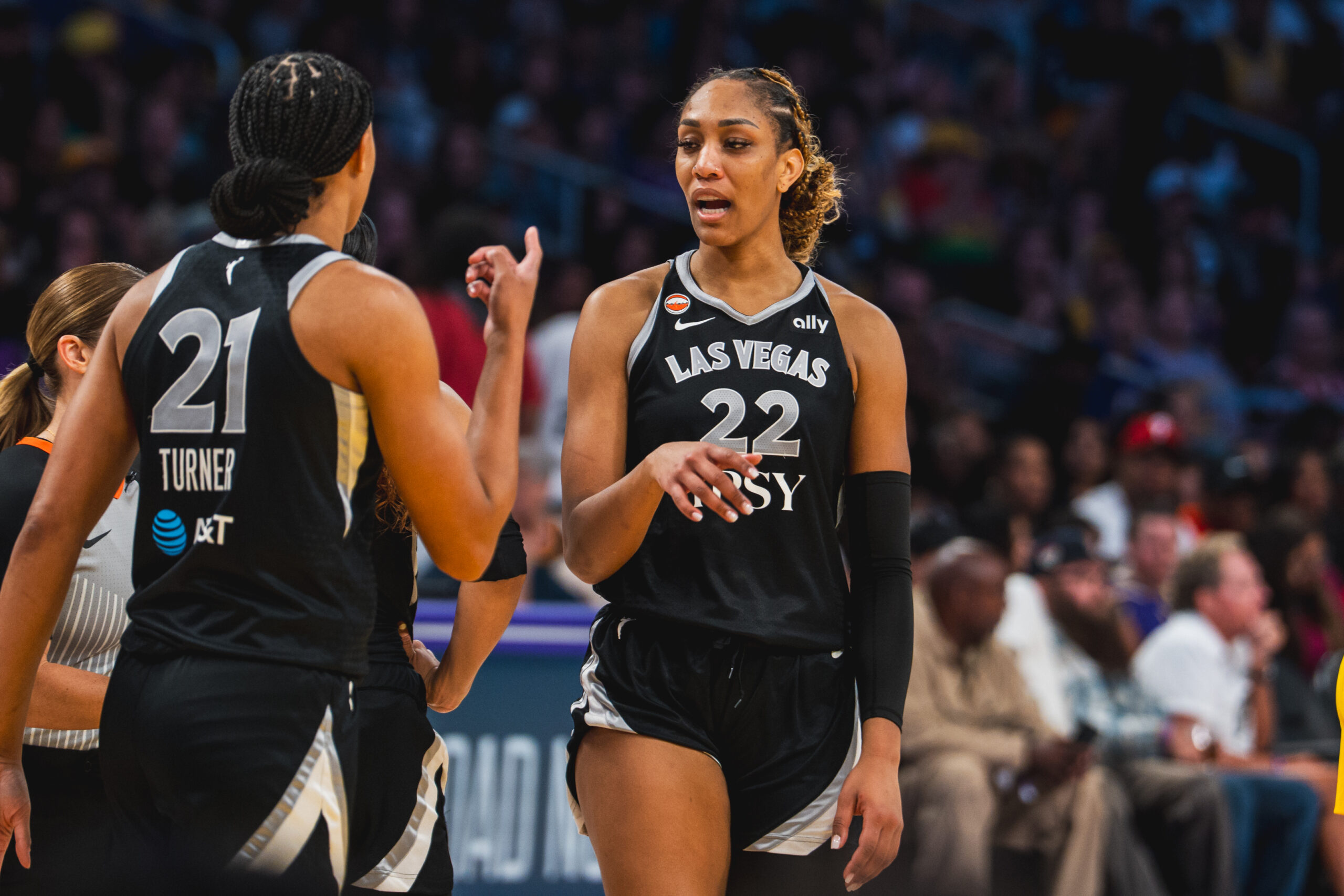
Las Vegas Aces: B+ (18-8)
Like Will Smith before them, the difference between the Aces and their contemporaries is that they make this job look good. The prowess and experience that multiple championship tours offer has allowed the defending champion Aces to work through happenings that would sink less fortified ships.
Vegas has somehow been on the wrong end of three of the ten WNBA games decided by at least 30 points this season. A team that was already hurting for depth (Jewell Loyd, for example, is averaging under 10 points for the first time in her career) saw its top reserve and potential feel-good story, Chennedy Carter, fall out of favor in the rotation and eventually off the roster entirely.
But it’s hard to fall too far when what potentially stands as the most titanic trio in WNBA history (Chelsea Gray, A’ja Wilson, Jackie Young) is on your side and valuable full-time newcomers to the fold like Cheyenne Parker-Tyus and NaLyssa Smith have helped make up for the compacted rotation, though they and Stephanie Talbot will likely be called upon to pick up the defensive slack.
Even with all the so-called calamities that could’ve bankrupted this latest Vegas title run, the Aces are working with a de facto jackpot considering where they stood at this point last year. It’s a double-edged sword, of course, as this new success means they won’t be able to pull off another second half sneak attack. But, through it all, it’s hard to imagine the smashmouth Aces wanting it any other way.
1st Half MVP: A’ja Wilson
Really, what do you expect?
On paper it should be hard, or at least marginally more difficult, for a player like Wilson to claim as many MVP awards as she, simply because of the rapport and dominance she has established with Gray and Young. With a group like that in town, the Aces’ playoff spot can likely be etched in pen until further notice.
Yet, Wilson continues to prove herself unavoidable and inevitable: she ended the first half as the WNBA’s leader in points and blocks and was third in rebounding behind Shepard and Reese. She should also garner strong consideration for a full Defensive Player of the Year honor after sharing the award with Smith last year: she’s fourth in rating among qualified defenders in addition to her swatting prowess. Of course, leave it to Wilson to fulfill the traditional and literal requirements the award requires: Las Vegas is 1-2 when she’s not on the floor this season, one of those defeats coming in the Commissioner’s Cup finale against New York.
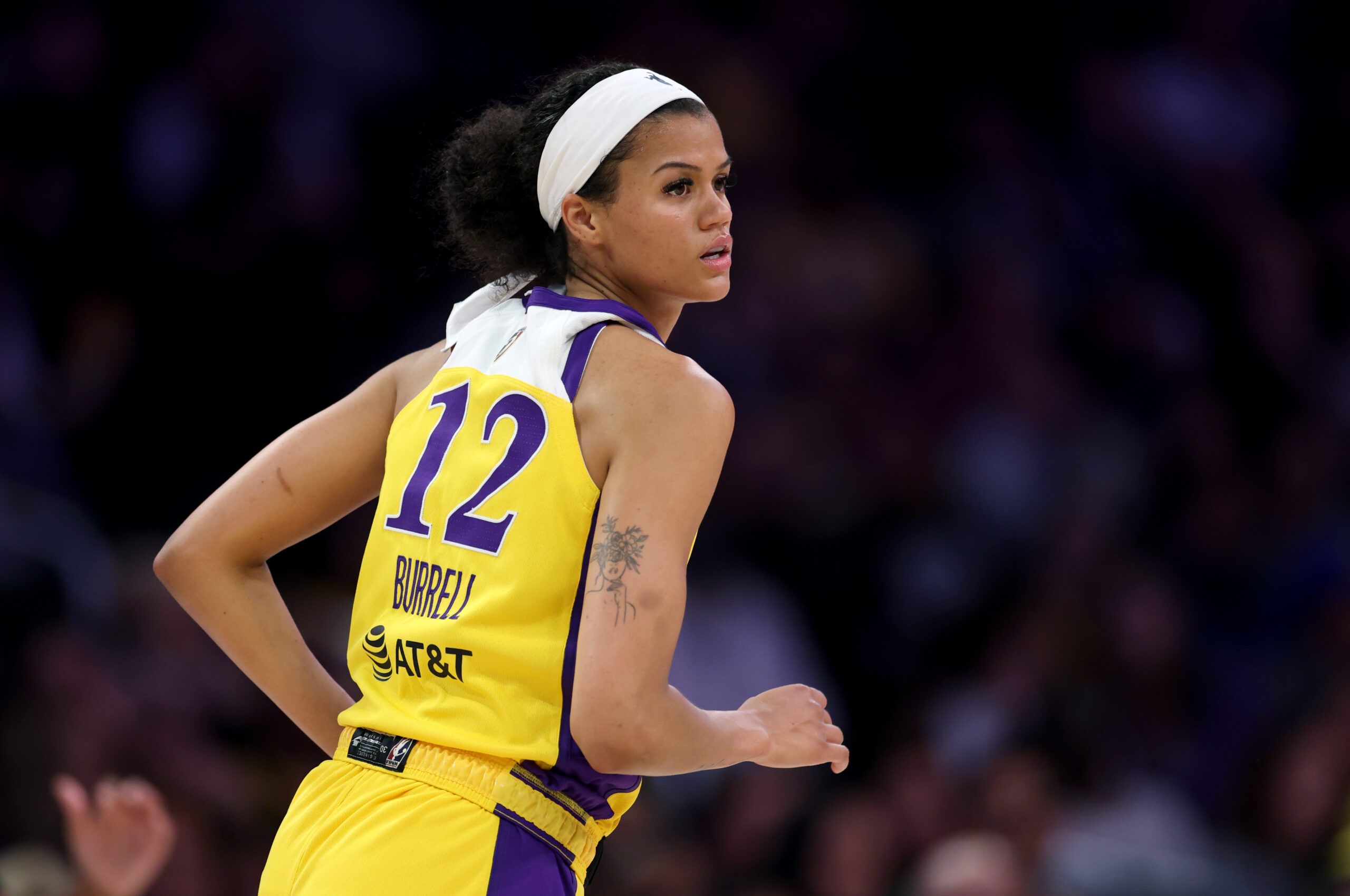
Los Angeles Sparks (10-16): D+
This brand of California dreamin’ isn’t exactly a nightmare but it’s nonetheless persistently purgatorial, a feeling epitomized by Kelsey Plum‘s ongoing medical woes.
Optimistically, one can say that one should enjoy these California calamities while they last: Rae Burrell has looked perfectly at home in the starting five and Cameron Brink is finally generating some on-floor momentum to the tune of a top sixth woman case. Over the last two months, Brink leads all reserves (min. 10 games played) with 1.5 blocks and ranks in the top five in points and rebounds. So the Sparks’ long-term homegrown prospects at least offer some form of SoCal sunshine.
Beyond that, however, the Sparks have painted themselves into quite a corner: they traded another potential building block in Rickea Jackson, inching toward a win-now approach by swapping her for Ariel Atkins. It’s hard to fully digest the loss of Jackson considering her own injury woes but the Sparks have had to watch the Seattle Storm build their own future by picking Awa Fam and Dominique Malonga with the draft picks they once owned. Making those deals all the more dire is the fact that the LA yields aren’t on the floor: Jackson and Kia Nurse are gone while nothing more needs to be said about Plum’s status.
That places the Sparks in an uncomfortable spot where most of their assets are tied up in name-brand talents on the wrong side of 30, especially with discussions about the futures of Brink and Burrell on the horizon. Sometimes it works—watching WNBPA president Nneka Ogwumike wrap up the league’s 30th birthday party with a buzzer-beating triple is destined to go down as one of the top moments of the season no matter transpires next—but it doesn’t exactly paint a rosy picture for the present or future. General manager Raegan Pebley was the first made to pay for the shortcomings and time will tell what that means for second-year boss Lynne Roberts.
1st Half MVP: Rae Burrell
Plum did her part with scintillating shooting in the early going and the Sparks’ freefall in the standings upon her departure proves that she’s fulfilling the middle initial of MVP for better and worse. But since they’re bereft of their homegrown foundations (2025 first-round Sarah Ashlee Barker became a fan favorite in Portland before her own season-ending injury), they have to make do with the young talents left behind.
It’s great to see Brink succeed as a sixth woman, especially after some medically-induced meandering. But Burrell is the brightest Los Angeles has going for it in its future: granted a one-year prove-it deal and a promotion to the premier lineups, Burrell has nearly doubled her scoring output from last year and her 3-point percentage is up 60 points while she’s dishing out over two assists a game for the first time. Her defense could use some work, but she’s hardly alone in those shortcomings (Los Angeles is giving up a league-worst 94.1 points a game).
Burrell’s breakout was foreshadowed by a busy offseason: she was invited to the United States national team’s first camps and exhibitions in preparation for the 2028 Olympics and matched teammate Erica Wheeler three-for-three in winter’s Unrivaled excursion. The new general manager faces a tough clean-up project on his or her hands and the future of Burrell could stand as one of the first hurdles.
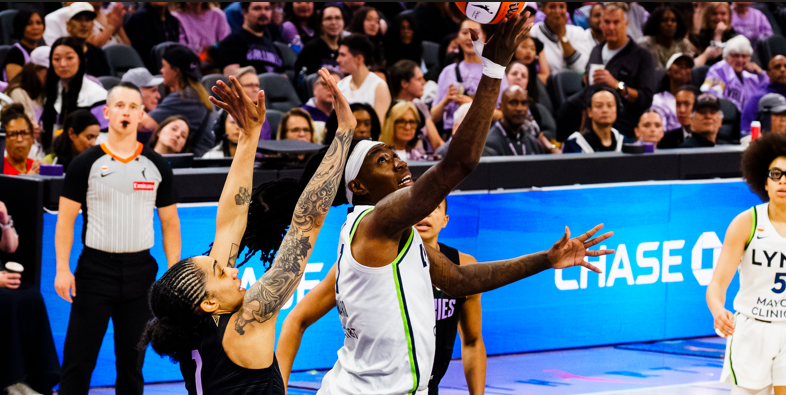
Minnesota Lynx: A+ (22-6)
Cheryl Reeve‘s career could be split in half, maybe even thirds, and every edition would likely reach various halls of fame. That’s why it’s no small statement to declare that what her current group is up to may well be responsible for her magnum opus. The worst thing you can say about this Lynx season is that they’re in a Michael Scott situation: there’s no A-plus-plus.
By all accounts, this is the year that things should’ve gone at least somewhat off the rails for Reeve’s factory of contention after losing a de facto starting five in the offseason. Their casualties in the free agency frenzy could be a starting five in certain cities and Napheesa Collier would have to watch most of the first half from the sidelines. Minnesota had way too much in the reserves to miss the playoffs entirely but the stage was set for at least a more arduous playoff journey.
Olivia Miles, however, had something to say about that: some found a case for her to go with the top pick of the draft a bit humorous but only Lynx fans are laughing manically at their luck to the tune of her supposed fall and their acquisition of the second choice. Miles’ sweeps of the rookie ledgers are impressive enough in a class that includes Fudd, Johnson, and more. But she’s making plays at the overall leads: she’s just short of being the 10th player averaging 20 points, places similarly in assists, and her supposed defensive weakness has her sixth among women with at least 20 games and 20 minutes played.
It wouldn’t be the Lynx, obviously, without a team effort: Natasha Howard has staged a sterling reunion tour that will warrant Defensive Player of the Year consideration, Kayla McBride is back to shooting over 40% from deep, and Courtney Williams has retained the on and off-floor vibes. Even in-season adjustments have proven brilliant: further disaster seemed to strike the Lynx when Rookie In Name Only Emma Cechova went down, but Reeve and Co. have brought the best out of free agent find Nia Coffey. It has set a perfect table for Collier, who was back to her dominant self in her debut showings before and after the break.
Of course, any analysis of the Lynx’s latest affairs will likely be judged on whether or not they earned that elusive fifth title. But if this is what they’re doing in Miles’ debut … just wait until she enters her supposed prime.
1st Half MVP: Natasha Howard
Miles’ time will come. Heck, it’s obviously already here. But she always had the luxuries of time, consideration, and development on her side. If she hit the wall, she had the veteran safety blankets of the backcourt in McBride and Williams to fall back on. Howard, on the other hand, was afforded no such privilege … not that that’s stopped her.
Howard came into a post situation that was bereft of Smith, Shepard, and Bridget Carleton. Watching Shepard capitalize on last year’s potential in North Texas could’ve been particularly grating, especially with the soon-to-be 35-year-old Howard manning the replacements with Coffey. Back in Minnesota for the first time since the 2017 title run, Howard has ensured the waiting for Collier has been anything but the hardest part.
Having already made a sizable statement in guiding Indiana’s Caitlin Clark-less run to the cusp of last year’s Finals, Howard is shooting over 58% from the floor in the best output of her career, shares the best net rating in the 20/20 with Miles, and should make a major case for another Defensive Player of the Year title thanks to her work in out-defending the work down by the Bay. Coffey deserves her credit too (she’d perhaps be a front-runner for Most Improved if not for Shakira Austin‘s capital breakout) but Howard’s sheer dominance in year 13 should be recognized.
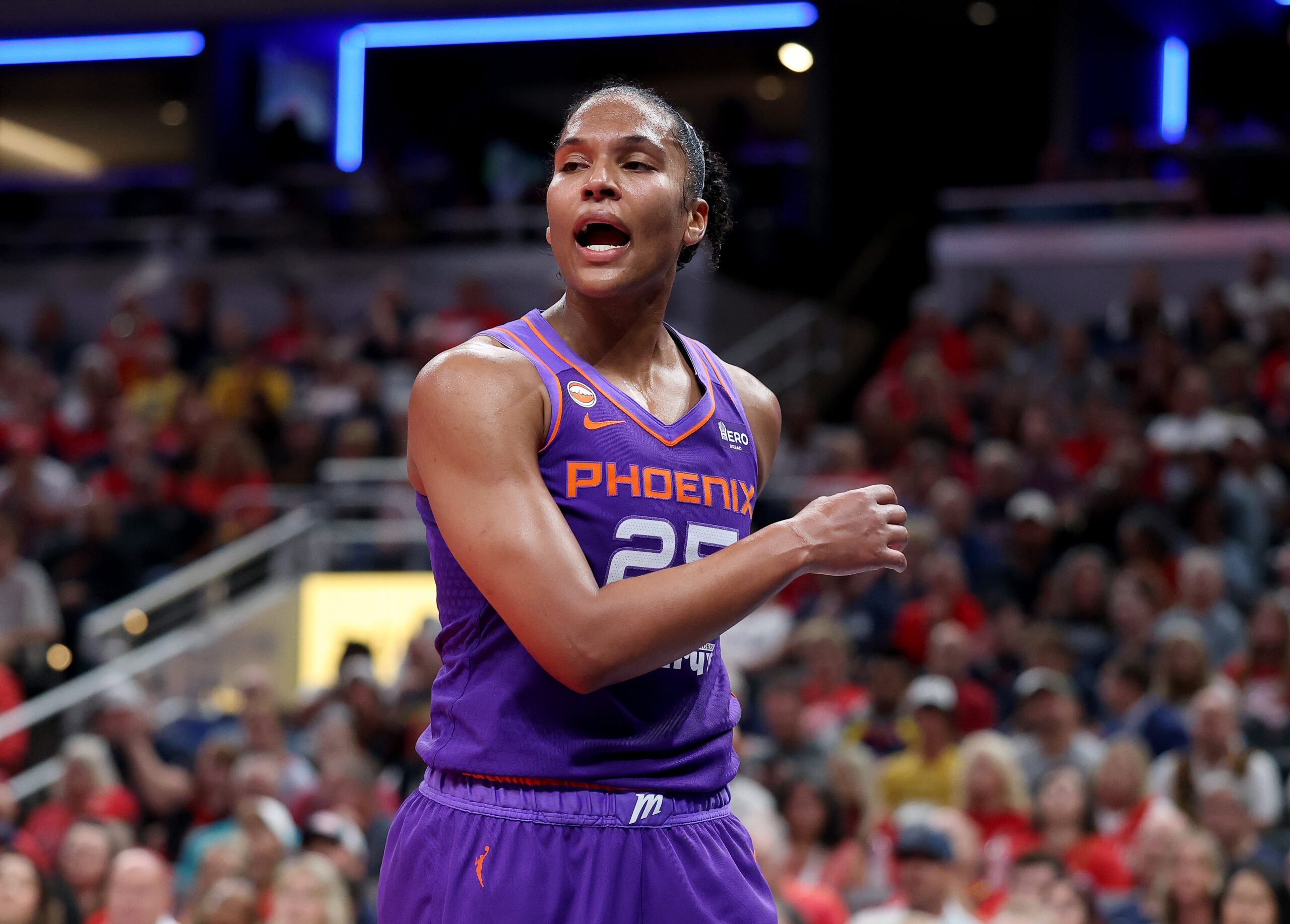
Phoenix Mercury: D (10-18)
Last year, so many things went right for the Mercury on their way back to the Finals. This time, however, Murphy’s Law might as well be called Mercury’s Law considering how things have cooled down.
It’s not like Phoenix has endured any lasting injuries beyond the season-opening absence of Sami Whitcomb. Its largest loss was Satou Sabally, who said that management made little effort to retain her. But running things back beyond that, even if it got a lick of championship success, has proven to be costly in a year where almost every other team underwent renovations, be it through transactions or medical resurrections.
It’s perhaps Sabally’s defensive prowess that has been missed the most: Phoenix has fallen from fifth to 11th in efficiency on that side of the ball this time around. It has let opponents fire away by allowing the most success 3-point attempts and it is second-to-last in their own overall tries.
Equally damning is the fact the Mercury have had little in terms of future development this year. Phoenix has not had a first-round pick take the floor since Smith in 2019 and the yields (or lack thereof) of such negligence are emerging seven years later. Perhaps their best source of hope, RINO Jovana Nogić, got off to a strong start in her WNBA debut but opted to step away due to personal reasons. Like Los Angeles before them, they’ve stocked up plenty of name-brand talents but the potential final hours of such entrants aren’t yielding much now and the outlook for the future is murky.
To be fair to Phoenix, it has managed to find some semblance of a groove before the break: mustering consecutive wins to close out an even decalogue and Kahleah Copper was named an impromptu All-Star after a sterling July saw her average over 21 points while hitting more than half her shots.
1st Half MVP: Alyssa Thomas
Thomas was at the center of some … feverish … controversy earlier this season. Even with that dominating her season’s narrative, she has managed to be a guiding, stabilizing force for a Mercury group that’s clearly working through continued identity issues.
Thomas is averaging over eight assists a game on a team that’s dishing out only 19. That’s less than one below last year’s career-high and she’s on pace to shoot over 50% from the field for the third consecutive tour. She’s also one of two next to Natasha Mack averaging over seven boards in the desert, below her usual work but still second-best on the team. It’s probably scary to think where the Mercury might if not for keeping pace with her usual outputs and Thomas stood as one of the most glaring absences last weekend in Chicago.
It’s fair to analyze and discuss Thomas’ role in on-floor extracirriculars. Those who claim that it’s her entire legacy, however, engage in willful ignorance.
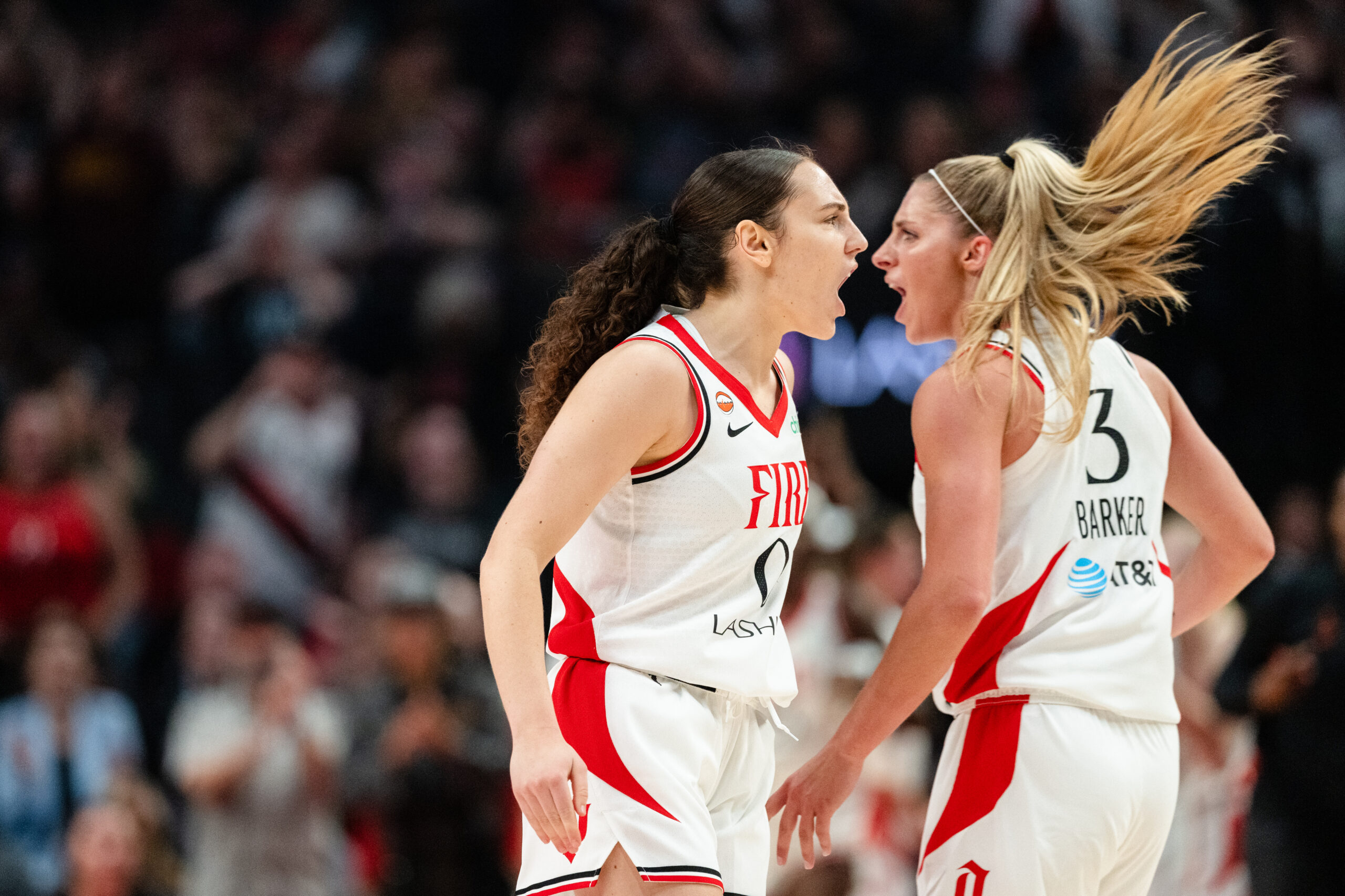
Portland Fire: C (11-16)
Like their sisters in expansion further north, the Fire has been unable to further fuel their early momentum. Still, what they’ve accomplished in the early going is a far cry from the usual pratfalls a newcomer endures.
Portland’s reboot was widely agreed to have gotten the shorter end of the expansion draft’s stick, but first-time head coach Alex Sarama has gotten results comparable to what Nakase had in the Bay Area when she likewise worked with role players, veterans in larger roles, or premier picks looking for career clarity. One of the leftovers from Nakase’s opening affairs, Carla Leite, has been one of top scorers and facilitators, while Carleton and Megan DiLeo (formerly Gustafson) have taken advantage of new opportunities from deep.
Unfortunately, despite some early progress via emergence in dramatics (including emphatic victories over New York, Indiana, and Dallas), this edition of the Fire faces an uphill battle to reach the playoffs in their maiden voyage. The road gets even more difficult with a dour effort in rebounding (currently last in the league in total and third-to-last in percentage despite the emergence of Emily Engstler) and the season long loss of Barker: the scorer of the first victorious buzzer-beater in Portland 2.0’s history was one of the last casualties of the first half, out for the year with a torn ACL.
1st Half MVP: Carla Leite
A staple of nearly expansion draft seems to be the newcomer(s) in question drafting a championship/contending squad’s role player or buried bench woman in an effort to impress her new teammates with her shiny title ring.
Golden State got Kayla Thornton. Toronto took Nyara Sabally. Portland might’ve felt it got its own such contributor in Carleton and she has, to her credit, helped keep things stabilized on the expansion rollercoaster.
Leite is more of a younger type at 22 and her trajectory was a bit of a question mark: she was, in fact, chosen in back-to-back expansion drafts. She got lost in the fold down by the Bay and probably could’ve benefitted from a consequence-free gap year in the Pacific Northwest but instead she’s become its most prominent playmaker. At 15.2 points and 5.9 assists, both more than double what she put up in Ballhalla and only partly boosted by her larger workload, Leite will be PDX’s name to watch in the MIP race.
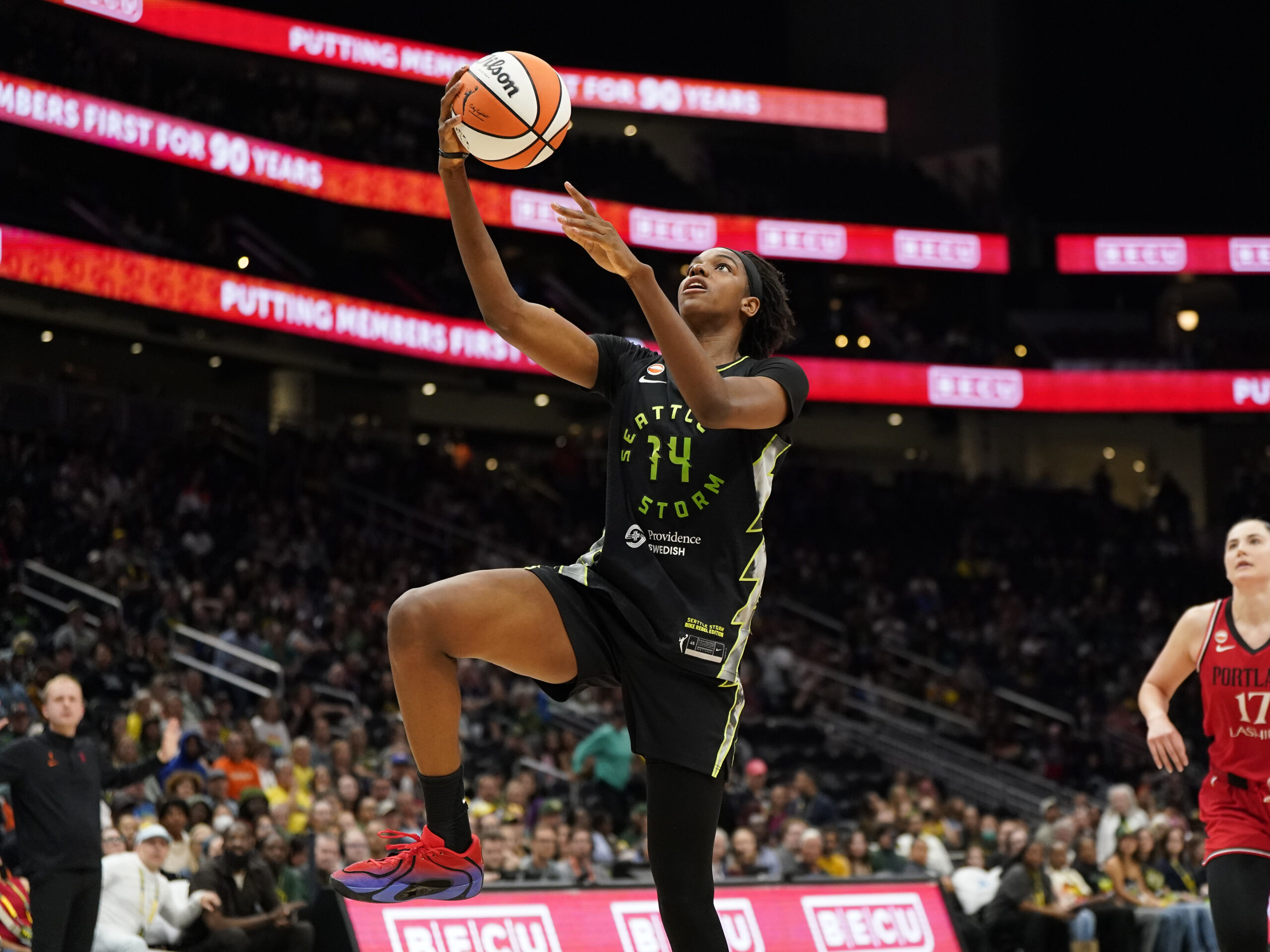
Seattle Storm: C+ (6-23)
Consider this a calm before the Storm … ‘s return to glory.
Seattle continues to work through the toiling throes of life after Sue Bird and Breanna Stewart and such a rebuild has (more than likely) reached the landmark of a postseason residency’s ending. A tour like this was probably inevitable after last year’s deadline dramatics (trying to extend their age of de facto contention by trading for Brittney Sykes failed to make a difference come fall) but this whole campaign feels like the Storm is just clearing its throat before its merciless takeover.
Natisha Hiedeman‘s scoring showcases, nearly doubling her career average, are worth the price of admission alone, even if Ezi Magbegor has endured further medical misfortune. But Seattle’s shrewd draft maneuvering has gotten Awa Fam and Dominique Malonga to don green and yellow. After her early departure from Golden State, Johnson has lived up to her first-round billing to the tune of being the only freshman averaging at least 13 points and five rebounds.
Even with such a brutal record, results are present in the early going: just under half (11) of their losses have come by five points or less and they own legitimate victories over current playoff teams Atlanta, New York, and Washington.
1st Half MVP: Dominique Malonga
The professional sports world has seen plenty of would-be franchise saviors flash potential at the end of a doomed rookie season, only to wilt once the spotlight’s done charging. That doesn’t appear to be the case for Malonga, acquired with a pick that originally belonged to the Los Angeles Sparks.
Malonga didn’t let a delayed, not denied, entry stifle the momentum she developed in last year’s final hours. She’s the third-leading scorer and rebounder among sophomores and she proved to be one of the finest French gifts in, ironically enough, July. In her last seven before the All-Star break, Malonga was the only player averaging double-figures in rebounds and one of three (next to Leite and Kiki Iriafen) to have multiple double-doubles in the span.
All-Star weekend, especially in the relatively tired “fantasy draft” format, has lost a good bit of its allure. Malonga, however, broke through the doldrums of the main event to post one of the weekend’s top highlights, fulfilling on a proposed promise to dunk. It’s perhaps the sweetest consolation prize that Storm fans have enjoyed this season and they’re inching toward full-on bragging rights if Malonga, Fam, and Johnson keep up their current paces.
Geoff Magliocchetti is on X @GeoffJMags
Editor’s Pick

The post WNBA 2026 First Half Grades: Western Conference appeared first on Ballislife.com.