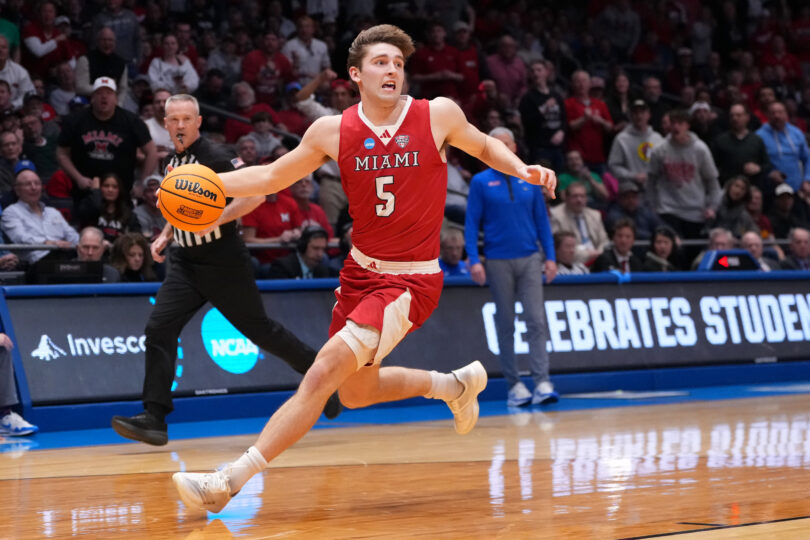
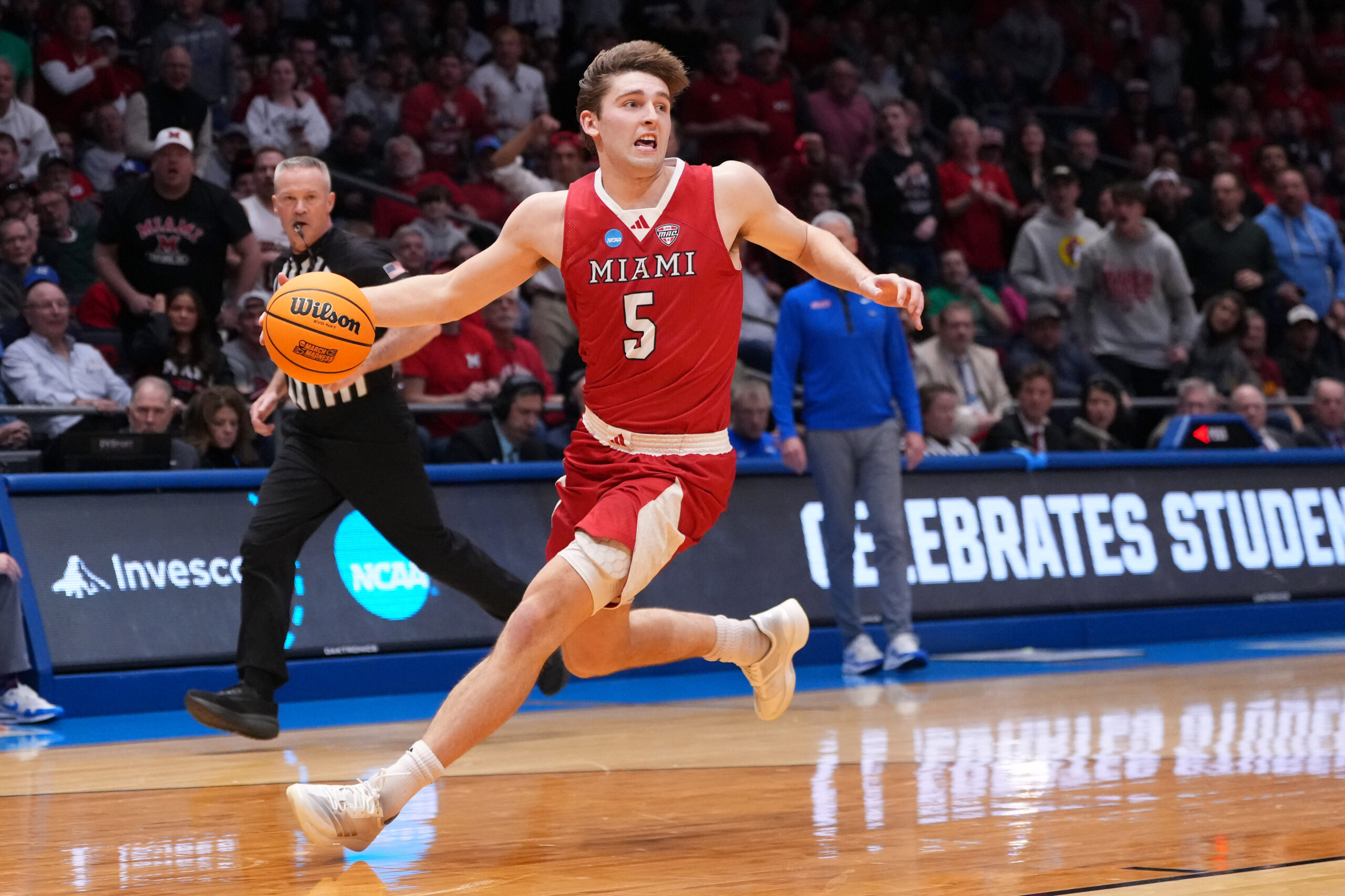

Peter Suder was relatively unknown among the 73 invitees to the 2026 NBA Draft Combine, but he has been striving to change that ever since.
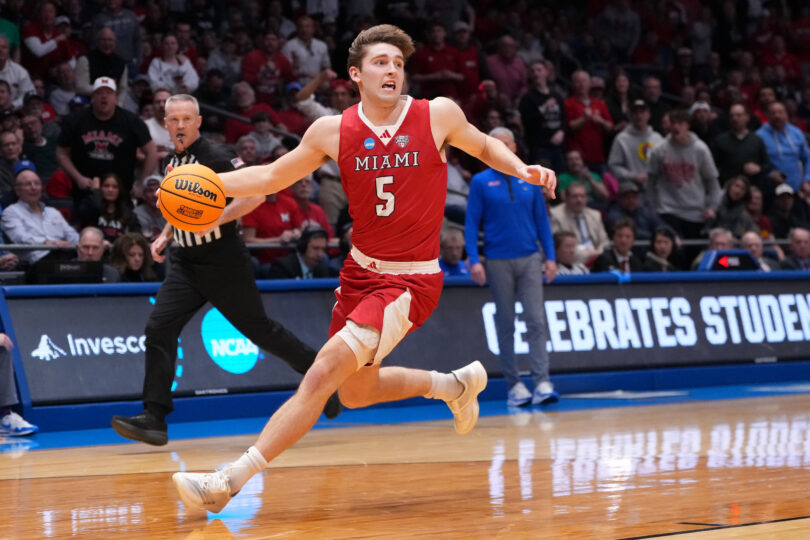
The 6-foot-5 guard from Miami University has shown he can connect, space, distribute, and defend without relying on offense to funnel through him. He gained attention with a Mid-American Conference Player of the Year campaign capped off by a 27-point performance in the NCAA Tournament against Tennessee, convincing the opposing coach of his potential.
“I can’t say enough about Peter Suder,” Tennessee coach Rick Barnes said at the time. “That dude is the real deal. We couldn’t do anything with him. He was terrific.”
There’s a spot in the NBA for a player who plays as intentionally as Peter Suder.
The little things: V-cuts, ball fakes, finding space to catch and score, back-screening for teammates in transition, and finishing plays.
Big fan of the instincts and feel Suder has for the game. pic.twitter.com/dVm2VgAUok
— Vince Wolfram (@vincewolfram15) May 28, 2026
From Bellarmine to MAC Player of the Year
Suder’s case is based on four years of consistent improvement. He began his career at Bellarmine, primarily playing his natural role of point guard. The Indianapolis-raised Suder had difficulties with perimeter shooting making 27.3% of his thre-pointers as a freshman and 24.0% as a sophomore. After transferring to Miami, his shooting improved and caught up with his overall game.
As a junior, he hit 35.1% of his three-pointers and improved to 42.1% in his senior year, which saw the Redhawks post an undefeated regular season. He averaged 14.8 points, 4.6 rebounds, and 4.0 assists, with a shooting accuracy of 54.6% and an effective field goal percentage of 60.7%. His strong performance earned him the MAC Player of the Year award, adding to a resume that also included first-team all-conference honors and the team captaincy in each of the last two seasons.
Suder often talks about the first shot he missed, which he managed to improve with extensive practice.
“Shooting is number one,” Suder told BallisLife. “I didn’t start off very well from behind the three-point line during my freshman and sophomore years. I just stuck with the process and kept getting hundreds and hundreds of shots up every day. I ended up shooting 35% and then got into the 40s during my senior year.”
The shot wasn’t the only factor, as Suder also prided himself on his raised leadership in Oxford. He credited the Miami coaching staff led by Travis Steele for much of his progress on and off the floor and notes that their relationship persisted even after his eligibility expired.
“I’d also say my communication skills and leadership improved. Being a team captain the last two or three years really helped with that, and this past year I developed a lot more ball-handling and point guard tendencies.” Suder said. “My coaching staff has been great these past two years. They got me in the gym and helped change a lot about my game. They came to the combine, checked in on me every day, and have stayed involved throughout the process. It’s really a family feel.”
A Connector Who Can Shoot
Suder’s shooting ability is vital for his NBA prospects. In his senior year he also shot 48% on two-pointers, and 44% in catch-and-shoot scenarios. He showed skill in creating shots via isolation and pick-and-roll plays. Additionally, with a 22% assist rate, his point guard experience enhances his playmaking, supporting his shooting and court spacing.
“Number one, you’ve got to be able to shoot the cover off the ball from three-point range,” Suder noted. “The gap to get your shot off in the NBA is very tight with the athletes, length, and size they have. So catch-and-shoot threes have to be my bread and butter offensively.”
He also knows NBA defenses are built to run shooters off the line, and he cites his point-guard background as the counter.
“At Miami, I was also coming off ball screens, making reads, playing read-and-react basketball, and making the right decisions,” Suder said. “If somebody runs me off the line, I can get to a pull-up jumper, finish at the rim, or make plays for others. The main thing is impacting winning.”
Length, Defense and the IQ Teams Keep Mentioning
Suder, also armed with 6-foot-8 wingspan (ninth-best among guards measured at the combine), has attracted teams seeking versatile defenders. He is just as direct about where his defense tops out, a self-awareness that has tended to help prospects in his range rather than hurt them.
“My length can definitely disrupt shorter guards,” he said. “Against quicker players, I might have to give them a little more space and use my length to my advantage. If a guy is bigger than me, I can use my physicality … I understand I’m probably not going to be a lockdown defender at the next level because those guys are so talented. But I definitely think I can hold my own against the best players in the world.”
What may matter most is between the ears. Multiple teams have left pre-draft interviews saying his basketball IQ blew them away, and Suder counts it among his strongest selling points.
“I also think my basketball IQ, both offensively and defensively, is the number one thing that’s going to help me at the next level.”
The Pre-Draft Grind
Suder views the jump to pro basketball as a daily grind, and says embracing it has been his biggest adjustment.
“It’s a day-to-day process every day. It’s a grind,” he said. “You’ve got to get a lot better because it’s a different type of basketball. The top one percent of basketball players in the world are playing in the NBA. So staying consistent throughout your daily process and really locking in on the journey is the biggest thing.”
In spring, the résumé expanded as Suder made the All-Tournament Team at the Portsmouth Invitational postseason camp tournament, where he averaged 16.3 points, 2.7 rebounds, 3.3 assists, and 1.7 steals before settling into the workout circuit. He has consistently kept his training centered on the key skill that characterizes his draft case.
“I’ve done 17 workouts so far and have five more through June 20,” Suder stated. “One of the main things I’ve learned is that it’s your job now. That’s how it’s treated at the next level. It’s not really like recruiting in college. You go in, show what you can do, and then move on to the next workout. The main thing I’m working on right now is movement shooting and different types of catch-and-shoot situations. I’m just trying to perfect that skill for the next level.”
The Winning Blueprint
Fresh off helping Miami post the fourth perfect men’s Division I regular season of the new millennium, Suder has watched the NBA playoffs, analyzing how players maintain their roles and providing a thorough evaluation.
“You’ve got to do the little things,” Suder said. “The guys who don’t have the ball in their hands 90 percent of the game create space for others. They can shoot the cover off the ball from three. They make contested shots.”
“But it’s also the loose balls, hustle plays, tip-outs for offensive rebounds, and charges,” he continued. “Those are the types of plays that build momentum within a team, and especially in the playoffs they’re huge.”
Although he may not depart from the board early, a 22-year-old who is proficient in shooting, passing, defending, and strategic thinking usually secures a spot in the league after four consistent years of development. Suder believes teams are beginning to take notice.
Editor’s Pick

The post EXCLUSIVE: Peter Suder Makes NBA Draft Case appeared first on Ballislife.com.