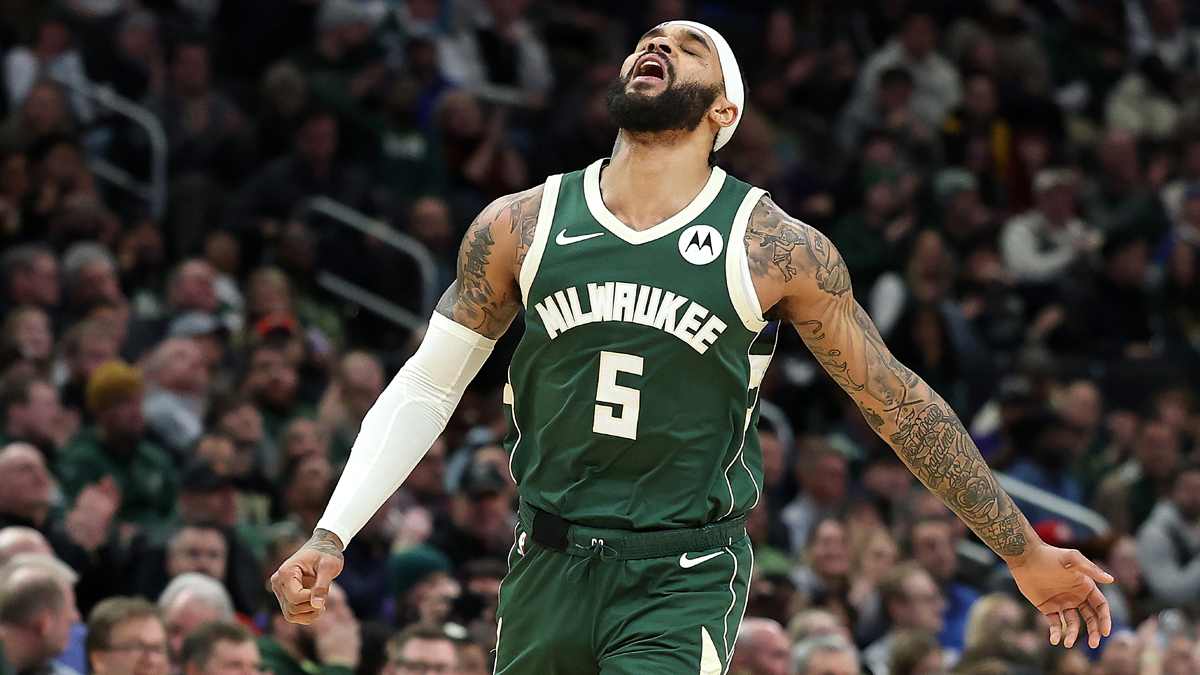
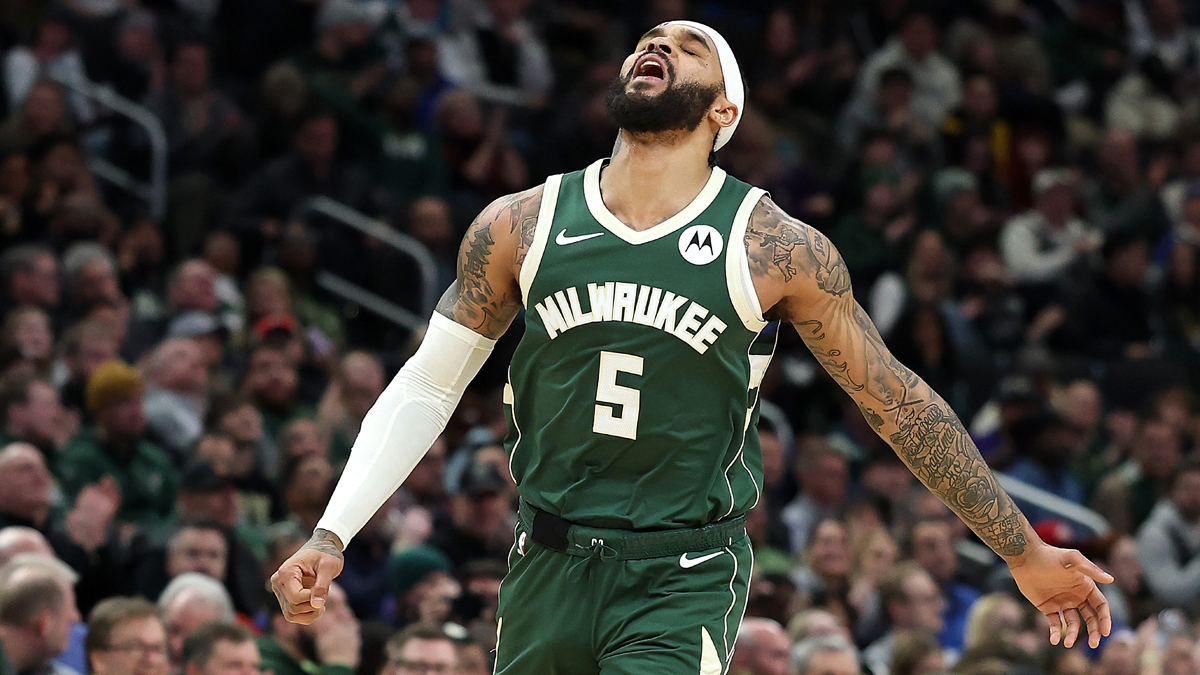

Two years after signing with the Milwaukee Bucks on a veteran’s minimum contract, Gary Trent Jr. is now drawing significant attention. When he officially signed his four-year, $64 million contract on July 16, the NBA confirmed it was reviewing the deal. The timeline of events has raised serious questions around the league, and the answers could get ugly for everyone involved.
Backdrop To Trent’s New Contract
There were rumblings of Trent landing a deal in the four-year max range ($68 million) before free agency even opened. That alone drew significant behind-the-scenes scrutiny around the league, with plenty of people questioning if such a head-scratching contract was even real. But the real concern was bigger: had someone been quietly working around the salary cap for years? Fast forward to July 16, and the NBA is looking into the matter.
Understanding why this contract has raised suspicion around the NBA requires looking beyond the final number. To understand how this contract raised suspicion, the timeline starts in Toronto.
Timeline To $68 Million Contract
On June 20, 2023, Trent exercised his near $18.6 million player option with the Raptors. His representatives, Rich Paul and Lucas Newton, quickly indicated their desire for a long-term extension, but it never materialized. By spring 2024, Michael Grange of Sportsnet reported that Toronto had withdrawn their offer, which was thought to be around $15 million per year. Trent was aiming for about $25 million annually, but free agency didn’t unfold as his team had hoped.
Ultimately, Trent had limited options entering free agency, as the market was already feeling the pressure of the Second Apron, which restricted what teams could realistically offer him. He signed at an under-market rate, at the veteran’s minimum, with Milwaukee.
Impact of Second Apron
At that time, the Bucks were deep enough into luxury tax territory to trigger Second Apron restrictions, a league penalty that limits teams to offering only minimum-salary contracts to free agents. Trent rejoined former Portland Trail Blazers teammate Damian Lillard, was personally recruited by Doc Rivers, and Milwaukee showed it remains dedicated to its championship ambitions with Giannis Antetokounmpo by adding a shooter. The following summer, Milwaukee re-signed Trent with a two-year, $7.5 million deal using the Non-Bird exception, giving him a 20% salary increase, but the real benefit of staying in Milwaukee was Trent continued to build toward Early Bird rights. It’s a rule that lets the Bucks offer him a bigger contract down the road, even though they’re already over the salary cap.
Trent’s Earning Power
Ordinarily, a player builds earning power by improving his production. Trent’s went the other way. Last season, he averaged 8.1 points, 1.0 rebound, and 1.2 assists over 65 games, with 38.7% shooting from the field and 36.0% from three. His role diminished, and he received several DNPs, making it his least productive season since entering the league.
He entered free agency with the position to secure his largest guaranteed contract to date. Prior to the start of free agency, Dallas Hoops Journal noted that negotiations were gaining momentum for a new Milwaukee deal, which would leverage Trent’s preserved Early Bird rights. Marc Stein later reported the Bucks had floated a smaller extension before raising their offer. By July 11, ESPN’s Shams Charania had the final number: four years, $64 million, fully guaranteed. ESPN’s Bobby Marks reported the contract begins at roughly $15.2 million in year one, just below the maximum Milwaukee could offer using Trent’s Early Bird exception.
The Gary Trent Jr. timeline of joining the Milwaukee Bucks on a minimum and two years later getting a four-year, $64M fully guaranteed deal is highly suspicious to say the least.
Here is a timeline of events from Trent Jr. picking up his player option with Toronto in 2023.… pic.twitter.com/6uYGTPfo2i
— Grant Afseth (@GrantAfseth) July 13, 2026
Curious Timeline To Trent’s Payday
The issue isn’t that Milwaukee is paying Trent $16 million a year, far more than his production warrants. What stands out is the progression of each step in the timeline to circumvent the salary cap for two years. Trent signed for the minimum when that’s all the Bucks could offer. He took another below-market deal that happened to preserve his Bird rights. Once his rights matured, he opted out and signed a fully guaranteed contract that nearly reached the maximum allowed under the Early Bird exception.
The full guarantee has only raised suspicion around the NBA. Under the league’s current labor agreement, front offices managing the second apron often prefer partial guarantees, team options, and shorter contracts to maintain flexibility. The current market resembles more the NFL’s than the fully guaranteed NBA market of a few years ago.
“Handshake” Agreement?
Milwaukee’s contract offer did not fit current market trends by guaranteeing four full seasons to a 27-year-old role player coming off his worst statistical year. The deal’s structure feels more like one from two or three offseasons back than one signed in July 2026, which would only add to suspicions of a prior handshake agreement.
Charania also reported that “at least one team” had considered a sign-and-trade for Trent at a similar salary, though no team has been publicly identified, which only adds to the suspicion. In a league where interested suitors are leaked frequently, it’s naturally suspicious that a rival team was truly interested. It raises a fair question whether a rival executive was participating as a favor, which in turn raises another question: will this team receive a future favor if this did indeed happen?
Bucks’ Current Rebuild Raises Eyebrows on Deal
Milwaukee’s pivot to a rebuild has only increased skepticism, especially given the logjam at Trent’s position group. Just before the 2026 draft, the Bucks traded Antetokounmpo and Bobby Portis to Miami for Tyler Herro, Kel’el Ware, Jaime Jaquez Jr., Kasparas Jakucionis, and a package of future picks. Teams in that position usually stay flexible and build assets instead of committing four guaranteed years to a declining 27-year-old role player. For league executives, this decision is tied to the two years prior.
There are greater potential implications at play in this situation. The NBA’s anti-circumvention rules are designed to prevent teams and players from entering into agreements outside the written contract, such as promising future payments in exchange for an immediate discount. If widespread, it could weaken the salary cap and second-apron restrictions, letting teams keep talent via off-the-books payments instead of official collective bargaining mechanisms. This prohibition is embedded in the contractual documentation required for every NBA agreement.
Paragraph 20 of the Uniform Player Contract states there are no side arrangements “concerning any future Renegotiation, Extension, or other amendment of this Contract.” Every negotiated deal includes an Agent Certification in which the agent swears, under penalty of perjury and before a notary, that the terms in Paragraph 20 are accurate. Moreover, the CBA specifies in Article XV that the team official who signs the contract, the player, and the agent must each submit a separate sworn certification regarding the same details for every contract, renegotiation, or extension during the deal’s duration. If any of these certifications are found to be false, criminal perjury charges can be brought against all three parties. The player, the agent, and the signing team official are each named individually.
We can also add to the list that Shams Charania reported “at least one team” was “poking around a potential sign-and-trade” for Gary Trent Jr. “at around the same type of number.”
Why is this important? Having documented interest, whether truly legitimate or not, is advantageous… https://t.co/Zu5wDBrRoh
— Grant Afseth (@GrantAfseth) July 16, 2026
What’s Next?
If the league’s review turns up proof that Trent and the Bucks had an understanding about this summer’s contract back when he signed those below-market deals, it wouldn’t just be a cap violation. This implies that the certifications linked to those earlier contracts—signed under oath by Trent, his agent, and whoever finalized the deal for Milwaukee—were fraudulent, and the Collective Bargaining Agreement (CBA) already includes a process to enforce such violations.
Teams around the NBA are monitoring how strictly the league office enforces the cap system, which has become much more restrictive under the current CBA.
This situation actually has precedent, dating back to 2000. At the time, the league discovered the Minnesota Timberwolves had a secret agreement with free agent Joe Smith, below-market contracts followed by a future payday once his Bird rights were triggered. The NBA voided Smith’s deal, fined the Timberwolves, and stripped Minnesota of multiple first-round picks. The precedent is why the league treats cases like this one seriously. Just because the Bucks are no longer contending for titles as originally intended with Trent as a key piece next to Antetokounmpo and Lillard doesn’t take away from the process in place.
This is part of why Trent’s contract is a hot topic: a player with a dropping market value accepted two below-market deals from a limited-spending team, which allowed Milwaukee to pay him more after his performance declined. The Bucks also fully guaranteed all four years, at a time when the rest of the league favored more cautious contracts.
The NBA is currently investigating potential salary cap circumvention by the Los Angeles Clippers and Kawhi Leonard, holding up his trade to the Raptors.
Trent’s contract situation obviously is one that we and other media outlets will monitor.

The post Gary Trent Jr.'s $64M Bucks Deal Sparks NBA Investigation appeared first on Ballislife.com.