Dolly Parton could barely contain the joy radiating from her petite 5-foot frame.
The country music legend was presenting Best Pop Female Vocal Performance alongside famed producer David Foster at the 1994 Grammy Awards in New York.
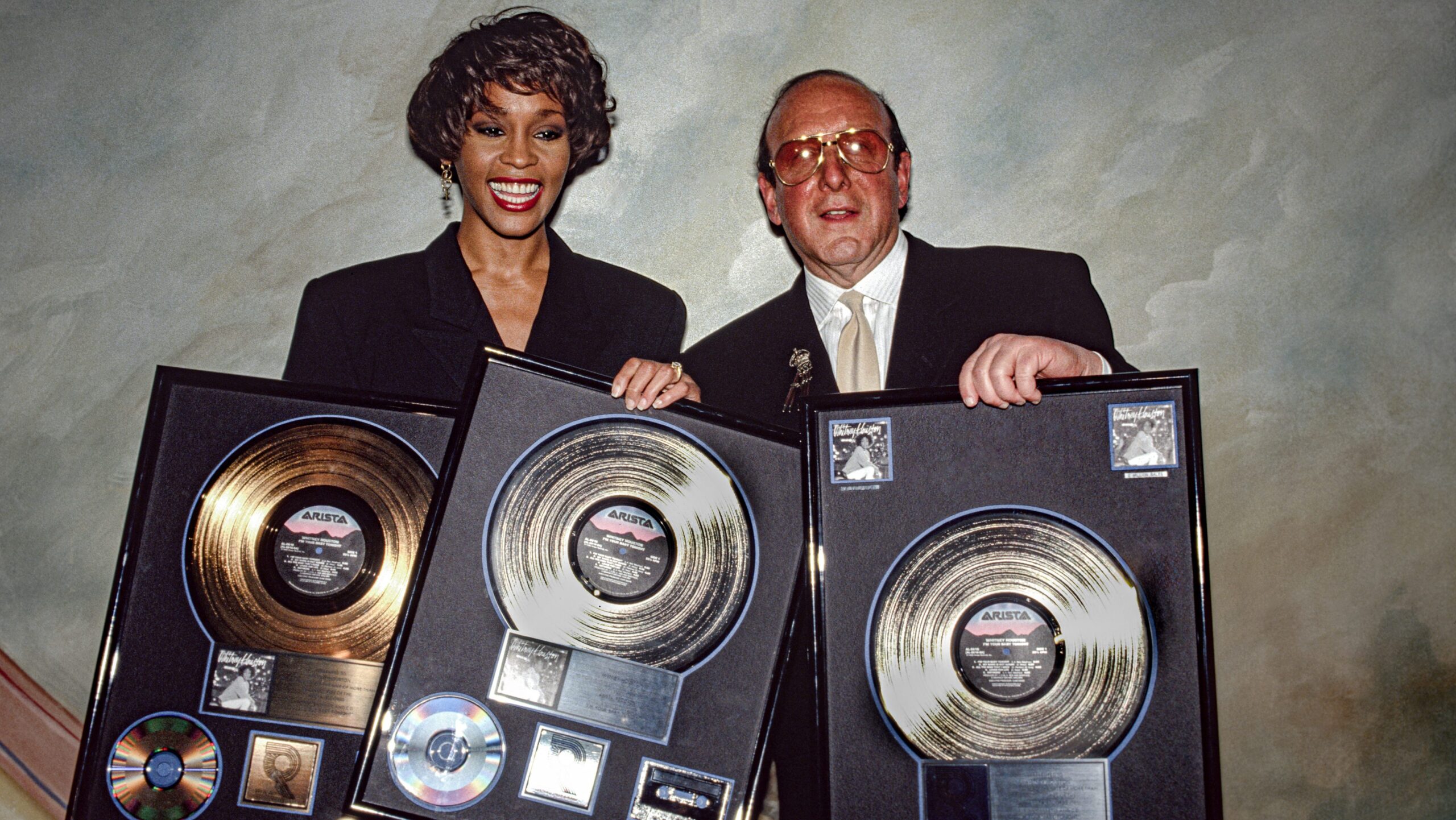
The winner, an effortlessly elegant Whitney Houston, was all but a foregone conclusion. Her soaring 1992 cover of Parton’s 1974 heart-on-the-sleeve country smash, “I Will Always Love You,” had spent a record-breaking 14 consecutive weeks atop the Billboard Hot 100 chart.
Parton squealed as she read Houston’s name. The unlikely pair then greeted each other excitedly like old friends on stage.
“Dolly, of course, coming from you, this is truly an honor. You wrote a beautiful song. Thank you so much for writing such beautiful songs,” Houston said during her acceptance speech.
That evening, the Parton composition also picked up the prestigious Record of the Year Award.
Three years later, Parton used millions in royalties from Houston’s cover to buy a strip mall and office complex in a historically Black neighborhood in Nashville, Tennessee.
“This is the house that Whitney built,” she later said.
That was Dolly Parton.
The Queen of Country, who died of cancer Tuesday at age 80, left a boundless cultural footprint. Born Jan. 19, 1946, Parton emerged from deep poverty in the mountains of East Tennessee. Shew grew up in a two-room cabin with 11 siblings and no running water or electricity before going on to sell more than 100 million albums.
“I don’t think about my life in terms of ‘superstar,’” Parton once admitted to The Associated Press. “I’m just a workin’ girl. I always say — and it’s the truth — that I am a workhorse that looks like a show horse. But I gotta keep it all up, and I enjoy all of it. My husband always said, ‘If anybody was ever born to be a star, it’s you.’”
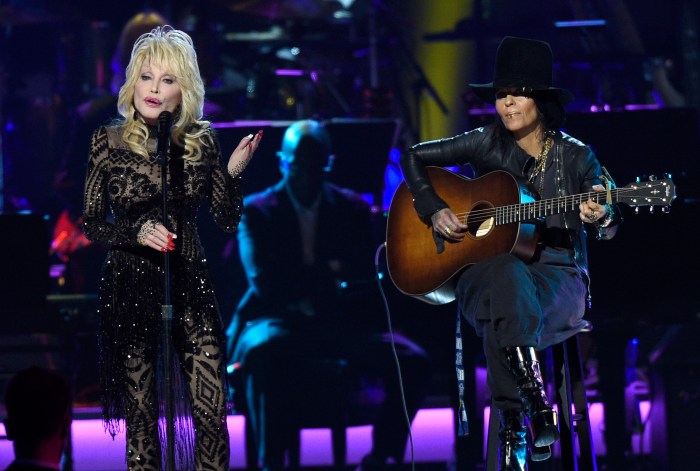
Chris Pizzello/Invision/AP
Yet there were times when Parton’s musical brilliance was overshadowed by her towering blonde wigs, proudly gaudy rhinestone-adorned outfits, fake beauty pageant lashes, and glossy lipstick — the famously cosmetically-enhanced, top-heavy singer once joked of her signature image: “I’m not a fashion icon; I’m an eyesore.”
An underrated guitarist, Parton could make you cry with “Coat of Many Colors,” an enduring tribute to her mother, Avie Lee. She was a masterful storyteller who wasn’t afraid to tackle sexually suggestive material on “It’s All Wrong, But It’s All Right.” Parton topped the pop charts with her catchy sing-along “9 to 5.” Her warm, down-home charm and soulful vocals even invited the hip-hop generation to sit at her table.
Entering the 2006 Academy Awards, Parton, nominated for “Travelin’ Soldier” from Transamerica, was a sentimental favorite who seemed like a shoo-in to pick up her first golden statue.
Juicy J, nominated as part of Three 6 Mafia for “It’s Hard out Here for a Pimp” from the film “Hustle & Flow,” certainly didn’t expect to be the Tennessean going home with the Best Original Song trophy that night.
“We was up against Dolly Parton. How is Three 6 Mafia gonna beat Dolly Parton?” he recounted in a 2023 interview with Variety.
But indeed, it was the Memphis rap group’s night, as Three 6 Mafia became the second hip-hop act to win the category. The group joined Eminem, who won for “Lose Yourself in 2002.
However, that was not the end of the story. A gracious Parton sent Juicy J and crew a congratulatory letter.
“We’re proud of you guys, and I’m just glad that the Oscar came back to Tennessee one way or another,” it read.
And when Parton appeared with Queen Latifah on BET’s 106 & Park during a publicity appearance for their 2012 movie musical Joyful Noise, she recalled the excitement she felt upon learning she would be sharing the screen with the hip-hop icon.
“When this film came to us … I said, ‘I’m in for certain now,’” Parton said.
Years later, Queen Latifah reflected on their friendship during an appearance on The Drew Barrymore Show.
“She’s just the salt of the earth. I mean, we did a movie called Joyful Noise together, and we had so much fun,” Latifah said. “She wrote all these songs, and she made me chicken and dumplings.”
Over the years, Jazzy Jeff and the Fresh Prince, Capone-N-Noreaga, Blackalicious and Aesop Rock have sampled Parton’s music. But perhaps the wildest genre clash is Fugees bandmember Pras’ “Ghetto Supastar (That Is What You Are).” The 1998 track interpolated Parton’s breezy “Islands in the Stream” — originally a Barry Gibb-penned duet with Kenny Rogers — and featured R&B singer Mya alongside a fever-dream verse by the Wu-Tang Clan’s late wild man Ol’ Dirty Bastard. The song was so infectious that it scored the Fugees’ perpetual odd-man-out a top 20 single.
Among the more than 3,000 songs Parton has reportedly written, though, perhaps no composition better represents her genre-defying ethos than the 1973 No. 1 hit, “Jolene.”
“He talks about you in his sleep/And there’s nothin’ I can do to keep/From cryin’ when he calls your name…” she mourns over a love she knows has died.
Parton’s “Jolene” has inspired hundreds of covers. It remains the singer-songwriter’s most malleable work. Goth pioneers The Sisters of Mercy, guitar rock god Jack White, jazz artist Matt White, pop provocateur Miley Cyrus, and rap adventurer Lil Nas X all reimagined the song.
But it’s Beyoncé’s defiant version, featured on her 2025 Grammy Album of the Year winner Cowboy Carter, that remains the most indelible crossroads union.
Parton had previously predicted Beyoncé would take on “Jolene.” She got her wish when the force of nature included her gritty cover on the history-making country album. Beyoncé made history by becoming the first Black woman to reach No. 1 on Billboard’s Top Country Albums chart.
Yet, she was snubbed by the majority-white Country Music Association. The global icon shared in a public statement that she felt unwelcome by the staunch traditionalists.
Parton publicly came out in support of Queen Bey in her own way, sharing a clip from her 1982 movie, The Best Little Whorehouse in Texas, on Instagram. The message was clear.
“Are you listening good?/Keep them leeches and bloodsuckers off the back roads,” Parton sang as her character, Mona. “And I know how to use a gun/And nobody messes with my girl(s)…”
Upon hearing of Parton’s death, Beyoncé posted a tribute to the legend on her website, calling her the “North Star.”
Parton’s support of Black artists was nothing new. She backed her friend Charley Pride, a pioneering Black country superstar, when he faced racism from white fans and Nashville’s passive-aggressive brass.
Pride, who was inducted into the Country Music Hall of Fame in 2000, died at 86 from COVID-19 complications in 2020.
“Dolly and Charley were incredibly supportive of each other through the years,” said Greg Gosselin, general manager of Pride’s label, Music City Records, in an interview with Andscape.
“Their bond was, in no small part, rooted in a shared experience of growing up rural, dirt poor and disadvantaged,” Gosselin continued, “although the barriers and biases they faced in lifting themselves to country music success during the 1960s and 1970s — he as a Black man and she as a woman—were a bit different.
“At one point, she faced canceled bookings for happily accepting an award from Charley during an awards show. But she endured that quibbling and quickly moved past it. That strength of character and her endearing personality are big reasons why Dolly was considered a national treasure.”
The post The Dolly Parton Black America embraced appeared first on Andscape.
Leave a Reply