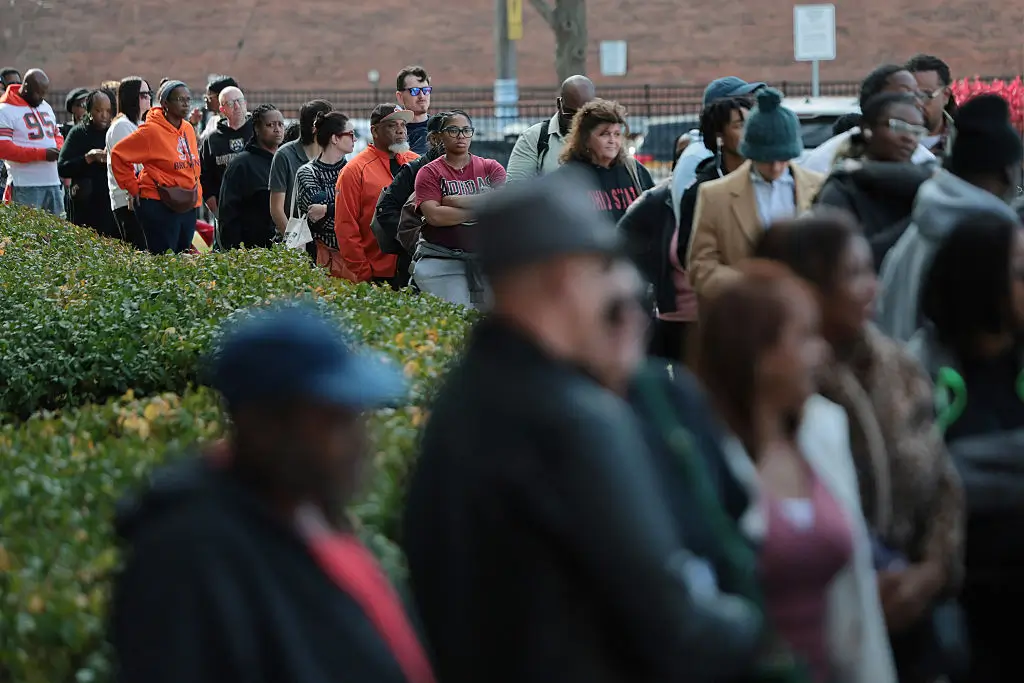

After record-breaking early voting activity in the midterm elections across the country, Americans will make their final choices on Election Day on Tuesday. Control of both chambers of Congress hangs in the balance — and is looking increasingly likely to swing Democratic — while hotly contested gubernatorial and Senate races could see Black candidates take office for the first time in decades, and in some states, for the first time ever in American history.
Republicans hold a 53-47 majority in the Senate, and Democrats need a net gain of four seats to take control. If Democrats hold all 13 of their seats up for election and flip four Republican-held seats, they will reach the 51-seat threshold for a clear majority.
| Race | Latest status |
|---|---|
| Georgia Governor | Awaiting results |
| Mississippi Senate | Awaiting results |
| Florida Governor | Awaiting results |
| Florida Senate | Awaiting results |
| Texas Senate | Awaiting results |
| North Carolina Senate | Awaiting results |
Georgia Governor: Keisha Lance Bottoms vs. Rick Jackson
Former Atlanta Mayor Keisha Lance Bottoms could become the nation’s first Black woman elected governor, putting Georgia at the center of a historic election that gives Democrats significantly more power and ends a 22-year trifecta of Republican control over state government.
Bottoms, 56, is in a dead heat with billionaire health care executive Rick Jackson, 72, a political novice who has poured more than $200 million of his own money into the campaign, including a relentless onslaught of TV and social media ads painting Bottoms as an ineffectual mayor who presided over a crime wave in Atlanta during the pandemic.
Florida Cop Shoves Past EMS to Tase Black Man Having a Seizure Multiple Times, Video Shows
Bottoms has defended her mayoral record, including investments in public safety and affordable housing while guiding the city through an unprecedented public health crisis and attendant social unrest. She promises to expand Medicaid, protect voting rights, lower taxes on groceries, and pause the development of data centers, which many Georgians do not favor.
She has called out Jackson’s primary campaign pledge to be “Donald Trump’s favorite governor” as Jackson has tried to distance himself from Trump as the president’s popularity has plummeted, and to align himself with Brian Kemp, Georgia’s moderate Republican governor.
Bottoms portrays Jackson as a billionaire out of touch with the needs of everyday Georgians who has profited from massive investments in (and state contracts to run) health care facilities while health care costs have soared and access to health care has narrowed.
Bottoms got a boost from a massive rally in Atlanta last week featuring President Barack Obama passionately supporting her candidacy and urging young and Black Georgians to vote, as well as from her joint campaigning with U.S. Sen. Jon Ossoff, who is leading GOP challenger Mike Collins by several points in polling.
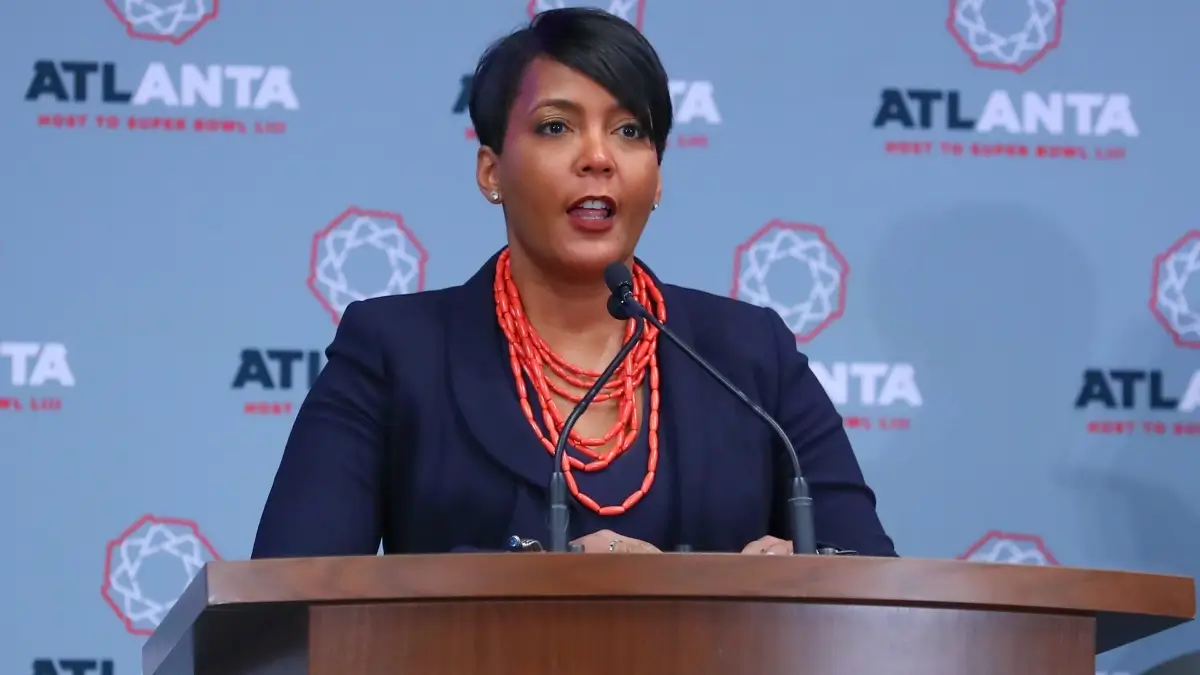
Mississippi: U.S. Senate: Scott Colom vs. Cindy Hyde-Smith
While ruby-red Mississippi has not elected a Black U.S. senator since 1875, during the Reconstruction era, nor a Democrat since 1982, Scott Colom, a successful district attorney, has gained momentum during the last leg of his campaign against incumbent Republican Sen. Cindy Hyde-Smith.
Campaigning on a platform of lowering costs for Mississippi families and protecting access to health care, Colom has closed the gap in polling, trailing Hyde-Smith by 3 percentage points as of Oct. 23, down from 6 points in late August, according to FiftyPlusOne Forecast. He also surpassed her in campaign fundraising over the last quarter.
Sensing an opening, national Democrats began pouring money into Colom’s campaign. High-profile Democratic leaders, including former Vice President Kamala Harris and Georgia Sen. Raphael Warnock, have visited Mississippi to stump for him, while former President Barack Obama endorsed Colom via video.
President Donald Trump, in turn, campaigned for Hyde-Smith in Corinth, a small city that typically leans Republican, last week. He told attendees that he was there “because Cindy’s doing great, but I just got to make sure. I can’t take a chance.”
Colom needs a huge turnout from Black voters and about a quarter of the white vote to break the white, GOP lock on statewide offices and to help turn control of the Senate to Democrats.
Mississippi, which is 37 percent Black, has the highest density of Black voters in the country. Democratic organizers are hoping to see a robust “Blacklash” among voters motivated by the gutting of the federal Voting Rights Act and gerrymandering of congressional districts in Mississippi that has reduced Black representation.
Florida Governor: Byron Donalds vs. David Jolly
U.S. Rep. Byron Donalds, a Republican, could become Florida’s first Black governor, with major stakes for education, affordability and health care in the state.
According to a NYTimes/Siena poll released last week, Donalds holds a slim lead over Democrat David Jolly of 4 percentage points, 48 percent to 44 percent.
Donalds, who has the support of GOP Gov. Ron DeSantis, as well as Trump and Elon Musk, wants to continue privatizing education in Florida, with more funding for school choice and less for the state’s “perpetually failing” public schools.
Jolly, meanwhile, is a public school champion who says charter and private schools need more oversight and transparency, the Tampa Bay Times reported.
Donalds supports a measure on the Nov. 3 ballot that would cut $12 billion a year in property taxes, which largely fund local governments and public schools. He favors expanding Florida’s Department of Government Efficiency (DOGE), which audits local government spending, seeks out waste and fraud, and can remove local officials from office.
Jolly calls that “Big Government conservatism” and favors local control of government. He wants the state to make major investments in transportation, social services, housing, and primary health care, including expanding Medicaid.
Donalds is a champion of Trump’s One Big Beautiful Bill Act, which provided overtime, tip, and enhanced tax deductions for millions of workers and seniors, but also dropped 247,000 Florida children from food stamps and instilled work and volunteer requirements for Medicaid, the Tampa Bay Times noted. He plans to save money by rooting out fraud in Medicaid and other social safety net programs.

Florida Senate: Angie Nixon vs. Ashley Moody
Democratic Socialist Angie Nixon’s bid to become Florida’s first Black U.S. Senator is testing whether a progressive Democrat can gain a foothold in the Republican-leaning state.
Heading into Election Day, most polls give Republican incumbent Sen. Ashley Moody, a former state attorney general appointed to the seat by DeSantis in Jan. 2025, the edge but put the race within the margin of error, Florida Politics reported. That includes a St. Pete Polls survey that found Moody at 49% and Nixon at 45% just a week before the election.
Nixon is a former union organizer and state senator who advocates for expanding Medicaid, increasing the minimum wage and universal child care. She surprised many by beating Alexander Vindman, the former Army Lt. Colonel who figured prominently in Trump’s first impeachment, in the Democrat primary.
She faces an uphill battle in this special election that will fill former Sen. Marco Rubio’s seat, vacated after he was appointed Secretary of State, through 2028.
Moody has significantly outspent Nixon, who was the top vote-getter among all Florida candidates in her 2018 and 2022 midterm campaigns for attorney general.
On Monday, Sean O’Brien, the national head of the Teamsters union, endorsed Moody in the Senate race, a move seen as a potential blow to Nixon’s expected support from working-class voters.
“Sen. Moody has been extremely helpful working with the Teamsters to protect workers’ pensions, defend good-paying jobs, and support well-funded union apprenticeship programs,” O’Brien posted on X.
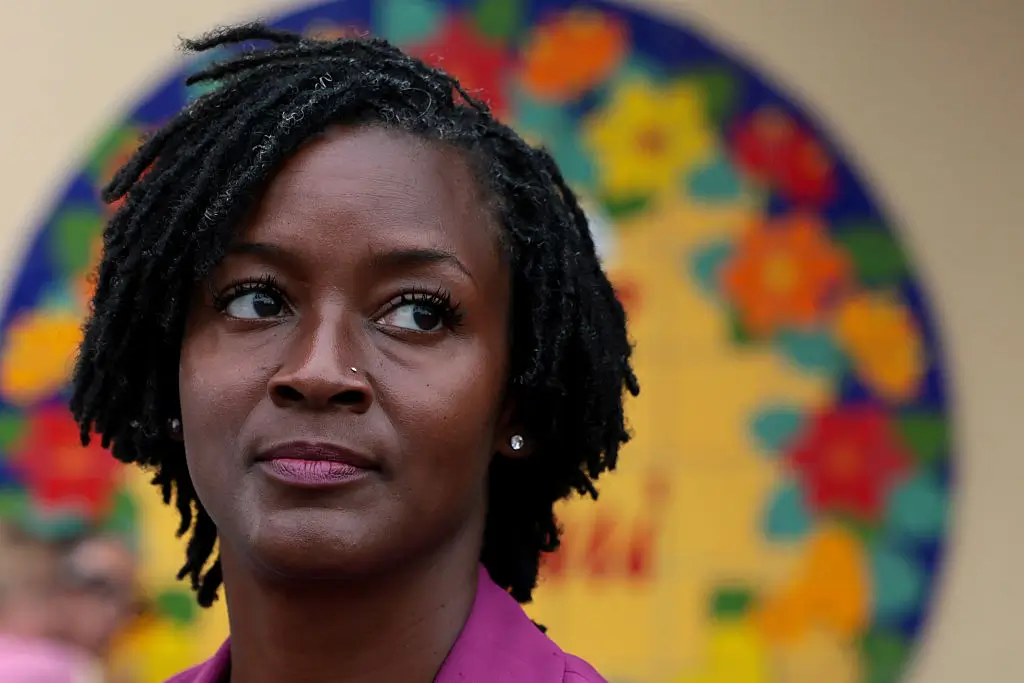
Texas Senate: James Talarico vs. Ken Paxton
A highly competitive contest in Texas could flip a longtime Republican Senate seat and help determine which party controls the U.S. Senate.
On election eve, Democratic state representative and seminarian James Talarico is polling 6 to 7 points ahead of scandal-plagued Republican state Attorney General Ken Paxton.
Democrats have not won a Senate seat in Texas since 1988, and President Trump carried the state by nearly 14 percentage points in the 2024 election, The New York Times observed.
But Paxton’s history of scandal, including a criminal indictment on securities fraud and impeachment in the Texas Legislature, along with growing anti-Trump sentiment, has worked in Talarico’s favor.
Political observers say Black and Latino voters will be critical for Talarico to win.
He earned the endorsement of the Congressional Black Caucus PAC in September, with CBC PAC Chair Gregory Meeks calling Talarico a “proven fighter” for public schools and small businesses.
Rep. Jasmine Crockett, whom he defeated in the Democratic primary, withheld support for Talarico for several months but definitively endorsed him in October. Former Houston City Council member and state Rep. Jolanda Jones gave Talarico her full endorsement on Oct. 20, citing his $25 million commitment to Black voter outreach and investments in Black-owned businesses and organizations.
Talarico needs to boost turnout in the majority-Black precincts in and around Houston, which typically strongly back Democrats, the Texas Tribune noted. Both candidates are also aggressively courting rural voters frustrated over data centers, Latino voters along the border and suburban voters in the critical Dallas-Fort Worth area.
North Carolina Senate: Roy Cooper vs. Michael Whatley
Former North Carolina Governor Roy Cooper maintains a solid lead over his Republican challenger Michael Whatley in Monday’s East Carolina University poll for the state’s U.S. Senate race.
The poll, conducted last week, shows Democrat Cooper leading Whatley 54% to 45%, while 1% of those polled support other candidates. The Democrat’s nine-point lead is up two points from the last ECU in October, WITN reported.
Cooper and Whatley, a former state GOP chairman and Republican National Committee chairman, are vying to succeed U.S. Sen. Thom Tillis, a Republican elected in 2014, who opted not to run for another six-year term amid well-publicized disputes with Trump.
Whatley says he intends to uphold conservative values, cut taxes, rein in illegal immigrants and generally continue Trump’s policies.
Cooper emphasizes economic affordability and lowering the cost of living for working families, including groceries, gas, utilities, housing and health care. He advocates expanding Medicaid, supporting workforce training and offering a child care tax credit.
The latest ECU poll found that 55 percent of respondents identified the economy and cost of living as their top issue. Border security and/or immigration ranked a distant second at 12 percent, followed by the conflict with Iran and/or other foreign policy issues at 10 percent. Affordable health care and crime and/or public safety each ranked 7 percent.
Black voters form a crucial part of Cooper’s coalition. Cooper leads Whatley among African American voters, 91 percent to 6 percent, while Whatley leads among white voters, 57 percent to 42 percent.
A win for Cooper would bring Democrats one seat closer to closing the 4-seat gap needed to win control of the U.S. Senate.
Six Races Black Voters Should Watch on Election Night — and Why the Stakes Go Beyond Making History