
Kobe Bryant’s memorable junior-to-senior summer defined what could take place in the NBA Draft 30 years ago today
One of the greatest NBA Draft classes of all time sat inside Continental Airlines Arena in East Rutherford, New Jersey, on June 26, 1996.
A draft loaded with talent, one name would eventually emerge and use a decorated 20-year career to place himself in the GOAT conversation after taking over the spotlight from the person he patterned everything after, Michael Jordan.
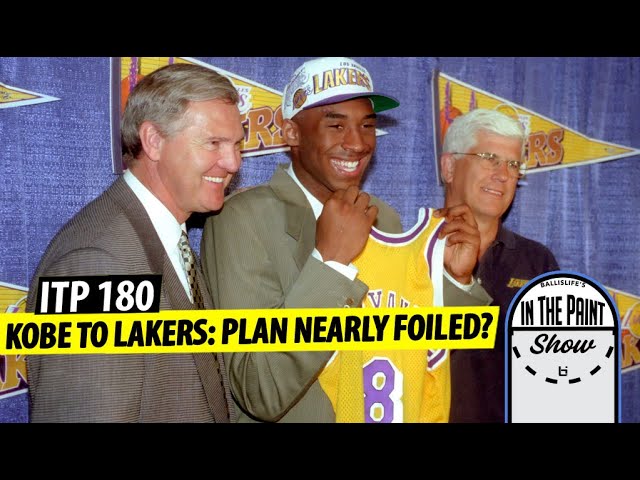
Seventeen-year old Kobe Bryant was selected 13th overall by the Charlotte Hornets that night. He was later traded to the Los Angeles Lakers for Vlade Divac in a pre-arranged deal that was nearly nixed when Divac pushed back and threatened to retire rather than play for the Hornets.
On this day 18yrs ago the hornets told me right after they drafted me that they had no use for me and were going to trade me #thanku #lakers
— Kobe Bryant (@kobebryant) July 1, 2014
Thank the basketball Gods, as the rest is history.
Bryant will always be considered one of the greatest Lakers of all time after ushering in another championship era, lifting the franchise from where it fell after the Magic and Kareem era.
He led the Lakers to five championships and was an All-Star 18 times. He was also named to the all-defensive team 12 times.
Even after tragically perishing with his daughter and seven others in a helicopter crash on Jan. 26, 2020, his “Mamba Mentality” continues to motivate people.
THE HIT LIST
Bryant wasn’t originally thought of as the next high-school-to-NBA superstar.
His junior-to-senior summer in 1995 was labeled as the year of the big man, with much of the talk surrounding the nation’s No. 1 recruit Tim Thomas of Paterson, New Jersey, and Lester Earl of Baton Rouge, Louisiana.
The month before, though, it was Kevin Garnett taken fifth overall by the Minnesota Timberwolves, out of Farragut Academy in Chicago.
But neither Thomas nor Earl was thinking about the pros when they arrived in Las Vegas for the then-inaugural The Big Time tournament.
At the same time, Bryant had created his notorious “hit list” after becoming infatuated with the idea of the GOAT status. As his stature grew in the high-school ranks, Bryant compiled a list of the players in his class that appeared before him on recruiting charts and became obsessed with destroying each one of them if and when they played against one another, especially during that summer, while on the adidas circuit of events.
Many of the power brokers of the summer circuit wanted Bryant to travel with a different team, but the product from Lower Merion, Pennsylvania was adamant on playing for Sam Rines‘ Team Philadelphia, which was built around his talents.
“Every kid on that team went on to play at a Division I school except for one, because of Kobe’s presence,” Sam Rines III told Ballislife on Thursday. “It was a team that knew how to move the ball, and it was successful because of Kobe’s mission. He was all about working hard. His mornings at home were spent working out with pros, his afternoons were with college guys at St. Joe’s, and his evenings were spent with his high school team.”
SHADOWING KOBE
I learned a lot about Bryant that week, mostly that he was wise beyond his years, and his aura was nothing like I had ever seen from a high-school athlete. I was fresh into a journalism career, and I knew what I was witnessing was special.
I was enamored and told everyone they needed to get to Durango to watch “this kid Kobe.”
Most importantly, I could see he was clearly ready to stomp on anyone who stepped in his path.
“There’s a lot of pressure on you when you come to tournaments like this,” Bryant told me on July 18, 1995. “You have to get one thing straight, though. You’re out here to improve yourself as a player. You’re not really out here to impress anybody. You’re out here trying to work on your game and compete with the top players in the nation.
“You’ve got to take it to another level. Especially if you know the player, because you don’t want him to talk trash to you after the game is over with … and I don’t like losing, so I’m going real hard.”
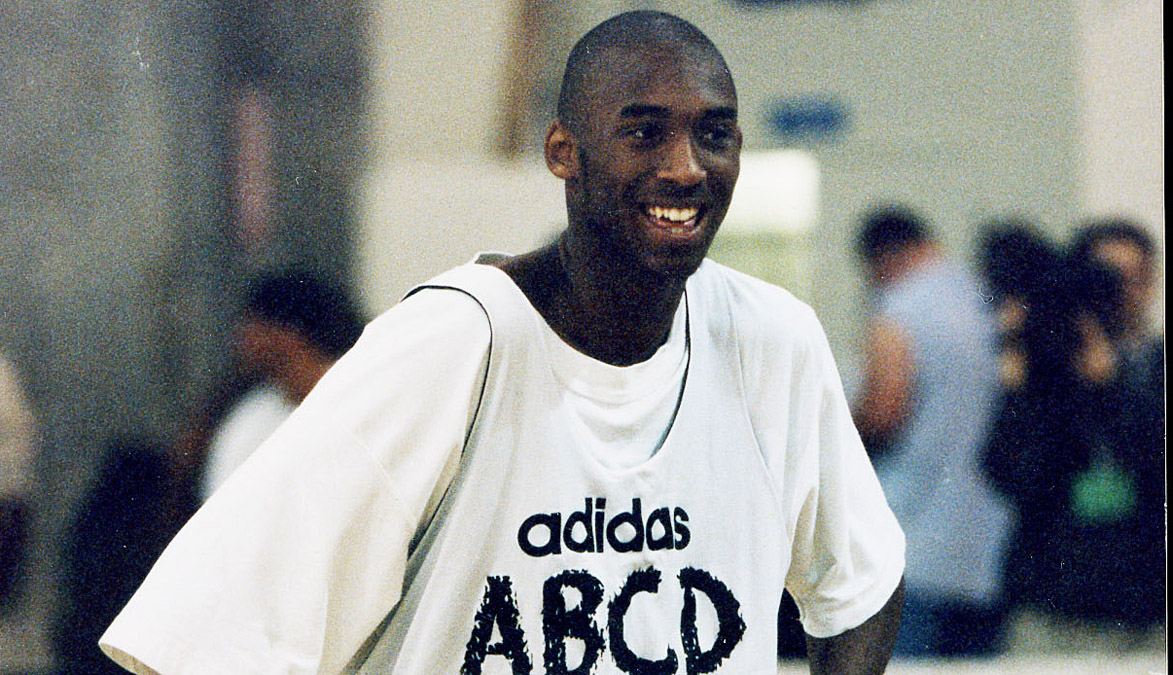
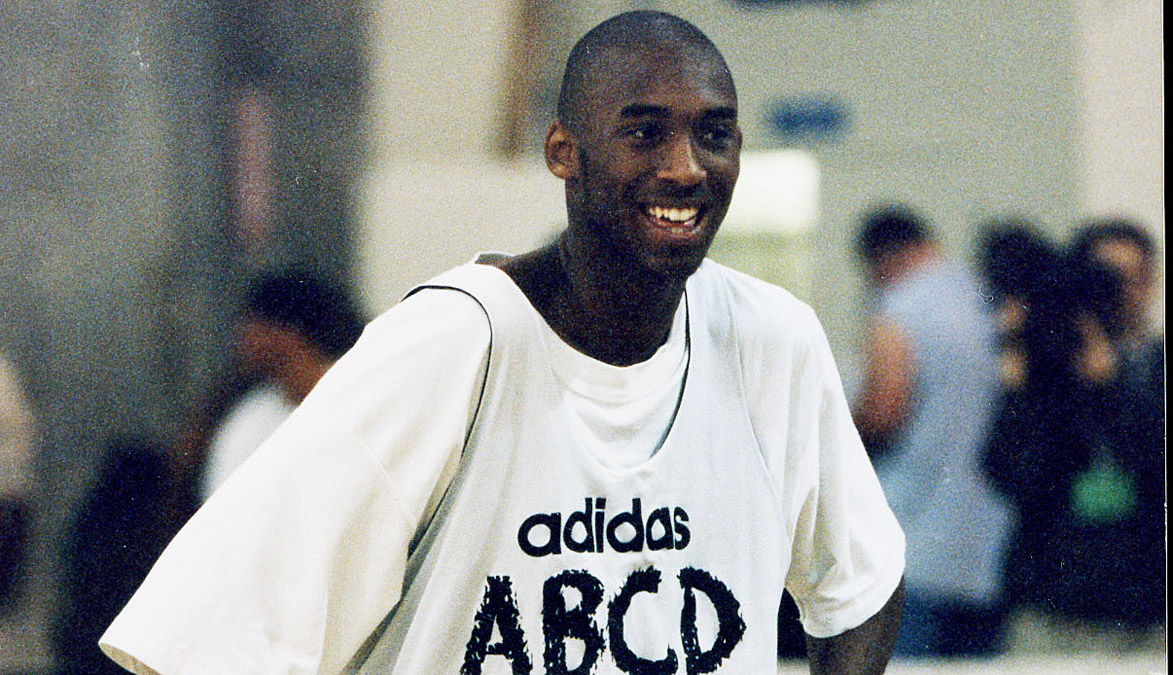
Bryant was fresh off an impressive week at the legendary ABCD Camp in Teaneck, New Jersey, and brought the momentum to Las Vegas, where he quickly stole the headlines at Durango High School.
Recruiting-based website The HOOP SCOOP ranked the rising junior No. 18 at ABCD Camp the previous summer of 1994 after a solid performance as a relative unknown. After meeting tourney director Sonny Vaccaro (who knew his late father Joe “Jellybean” Bryant because he played in his Roundball Classic game in 1972), he vowed to Vaccaro that he would be the best player at the prestigious camp in ’95.
Care to guess where The HOOP SCOOP ranked Kobe after the camp in 1995?
“Word got around, there’s this guy named Kobe that can really play,” said The Big Time tournament coordinator Jim Allen, who spoke to BallIsLife on Thursday.
Allen, who was the athletics director at Durango at the time and was assembling the gyms and staff for The Big Time, was former UNLV and New York Knicks star Greg Anthony‘s high school coach at Rancho, and remembers the week well. And that’s saying something as one of the founders of Las Vegas’ summer basketball circuit, seeing some of the greatest basketball players of all time visit during AAU’s emergence in Southern Nevada.
“Word spread quickly that there was someone who really knew how to play the game of basketball,” Allen said.
BIG TIME
One of the biggest scuttlebutts in Sam Rines’ first game was that the uniforms didn’t have numbers.
While most of the teams strolled through the gym with their Cadillac uniforms and minted bags, Bryant and his teammates looked more like a ragtag group with carry-on duffle bags, looking for a pickup game at Rucker Park in Manhattan or Venice Beach in California.
Scorekeepers started the week wondering how they would keep the official book. By the end of the week, they knew exactly who Bryant was, and his entry was filled with X’s and O’s.
His appearance at the ABCD Camp (which is reportedly making a comeback this summer under the leadership of NBA Hall of Famer Tracy McGray and the blessing of Vaccaro) was one thing, and was an indication that his childhood dream to follow in the footsteps of his father was beginning to unfold. But when he appeared in The Big Time Tournament, there was no denying it, as NBA scouts scurried to his games to sit alongside college coaches.
He may have put an exclamation point on his name during an NBA players’ camp for high schoolers, where he came from behind to swat the shot of seven-footer Loren Woods, who went on to play at Wake Forest and Arizona.
Bryant’s acrobatic skills and incredible vertical leap reverberated around Southern Nevada at the same time the Nike Invitational was being held on the campus of UNLV.
The word was out that the main attraction that week was neither at UNLV nor at any hotels on the Las Vegas Strip, but rather in Southwest Las Vegas at Durango.
THE AURA
“He really took that Jordan-aura personally,” Rines said. “He brought a ball with him everywhere he went when we traveled. We didn’t do too much outside of the tournament. He was unbelievably competitive.”
Garnett’s move had pro executives salivating for fresh talent out of high school, and Bryant looked like the next best thing.
Not only did Bryant leave his thumbprint on the Big Time’s during its first run, but he also helped open the door for summer grassroots basketball to make a national splash. The Big Time thrived until Vaccaro retired from the daily summer basketball scene after the summer of 2006.
“It started probably one of the greatest runs in the country of AAU basketball,” Allen said. “We grew from that first season to close to 400 teams with standing-room crowds in several gyms at the same time.”
And though Bryant’s sentiments about not impressing anyone and only improving earlier that week might have been true, he knew what he wanted to do all along.
“He told me he was going directly to the NBA before that trip,” Rines said.
And by the end of The Big Time, Garnett’s move was clearly in the back of Bryant’s mind when we later spoke that week.
“It plays a big part, because you say, ‘He just left; he went to the NBA,'” Bryant told me on July 21, 1995. “It makes you feel like you can do the same thing.”
Which he did, and then some.
Editor’s Pick

The post 30-Year Draft Retrospective: Kobe Bryant's '95 Summer Defined Path to Greatness appeared first on Ballislife.com.