
How do the WNBA’s Eastern Conference squads look after the first half?
Halftime beyond halftime has come and gone in the WNBA’s 30th season.
With the All-Star Game festivities in Chicago completed, a scintillating second half no doubt awaits on the hardwood road ahead. It’ll follow a thrilling opener, one that saw heroines rise and fall, surprises of both the pleasant and disappointing variety emerge, and one that set the tone for a season that could as thrilling as it is historic.
In anticipation of the second half of the season, BIL looks back on the first, grading each of the 15 teams on the WNBA ledgers today. We tackle the first seven with a look at the Eastern Conference …
Atlanta Dream: B— (16-10)
How the Dream responded to last season’s bittersweet tour was going to be one of the most vital, if not buried, subplots of the 2026 season. So far it’s safe to say that, save for a five-game hiccup that ran through July 4, they took things personally.
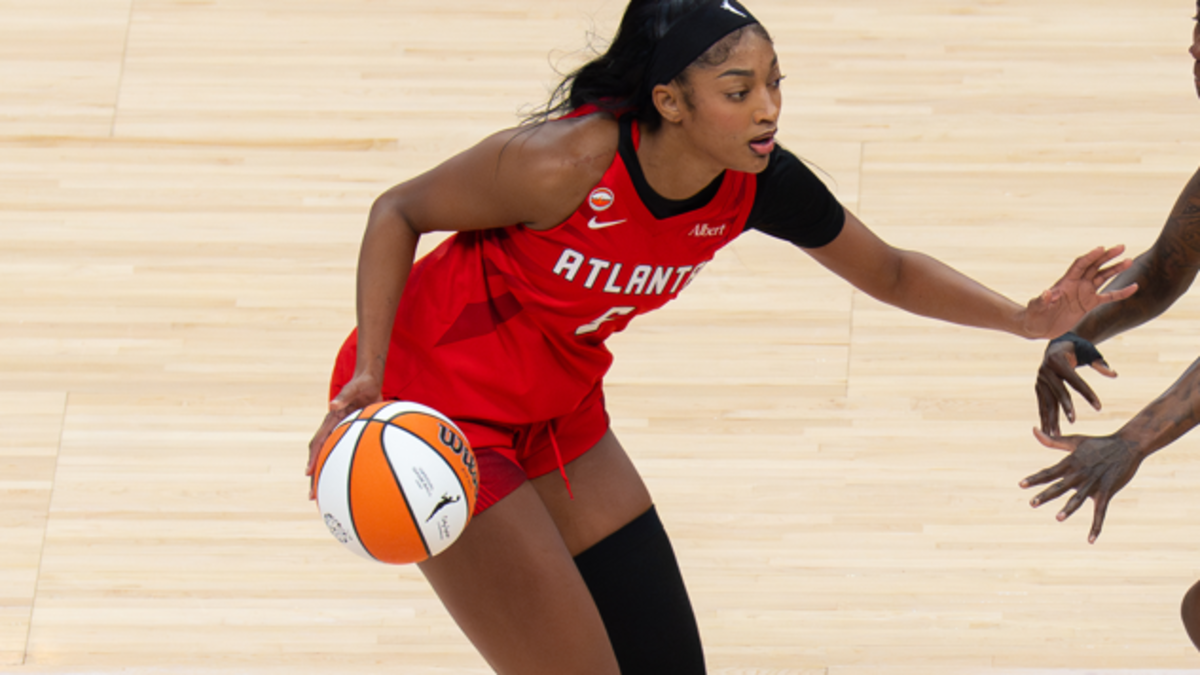
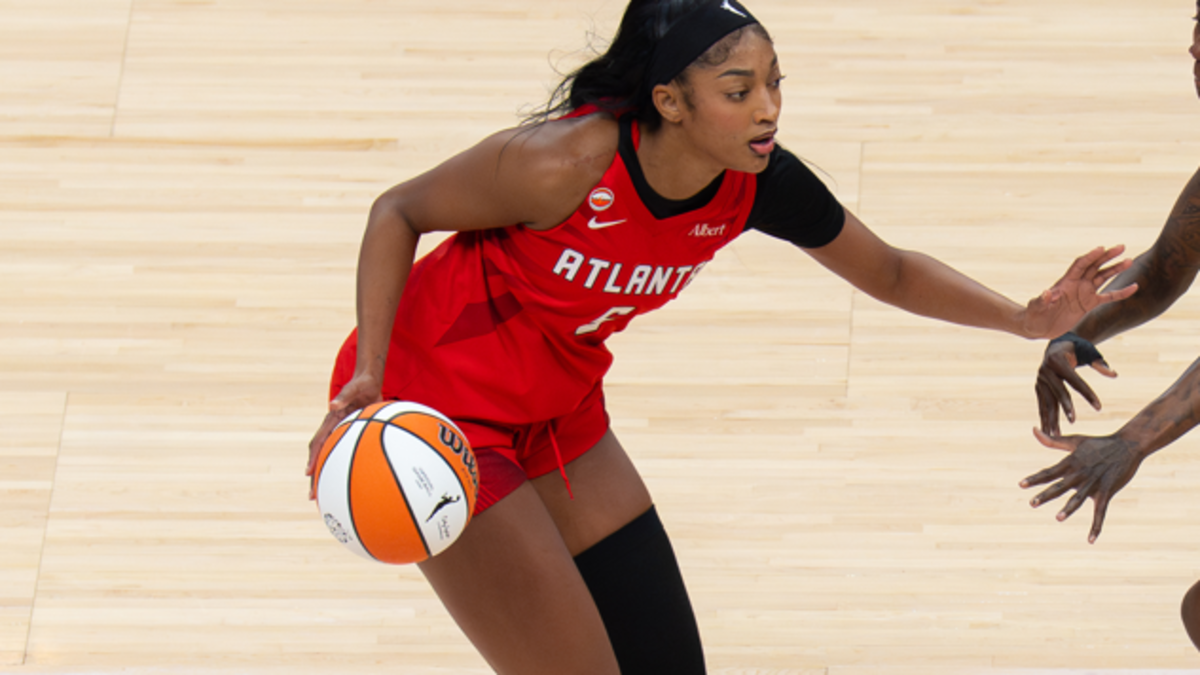
Of all the teams to put up some form of a win now approach in the speedy offseason, it made the most sense for the Dream, a group that had little issue in bringing back its headlining triumvirate in Allisha Gray, Naz Hillmon, and Rhyne Howard. General manager Dan Padover officially put in an offer on a WNBA penthouse residency by trading two first round picks to the Chicago Sky in exchange for Angel Reese.
More on Reese’s breakout shortly but the usual suspects have turned the Dream’s dreams into a continued reality: Gray and Howard continue to ensure that no game is over with their sterling shooting abilities while the numbers reigning top sixth woman Hillmon are fairly comparable to last year’s landmark tallies upon her move to the starting five.
While the announcement of their participation was a bit delayed, Gray and Howard joined Reese at the All-Star Game, making the Dream one of three teams to send a trio to Chicago. It could’ve well been four considering the recent work of Jordin Canada.
Canada has upped her already-formidable defensive game (she and Howard lead the league in steals) but she’s also putting her best scoring output since her previous breakout in Los Angeles. Entering the second half, Canada is tied for the seventh-best net rating among those playing at least 20 a game, united in balance with Kayla McBride and Jackie Young.
1st Half MVP: Angel Reese
The third year of Reese’s reign has once again proven that her brand of ball isn’t for everyone. When it came to Reese’s on-floor value, one where any shortcomings could be buried in the excuse of rebuilding in Chicago, a switch probably could’ve only worked in a small handful of destinations. Atlanta has undoubtedly been one.
On a team packed with sharpshooters, cleaning up any potential mistakes stands as one of the top priority items. Atlanta had that last year and proved its preparation by leading the league in both rebounding departments. Maintaining such production was made an uphill battle when Brittney Griner moved to Connecticut and Brionna Jones landed on the daily injury list due to a right meniscus tear.
Enter Reese, who was sent south for the price of the aforementioned premier picks.
Atlanta won’t be missing those selections considering that Reese sits second in rebounds with 11.5 a game and is also the runner-up in rebounding percentage (min. 5 games, at least 20 minutes played). Reese has also earned rave reviews for her work with an apprentice: rookie Madina Okot has routinely praised working with Reese and her own development was on display just before the break: over the final five games, Okot led all women with at least 50 total minutes with 18 rebounds per 40 minutes.
So many careers have been derailed by being in the wrong place at the wrong time. Reese has flipped the narrative in her favor and she seems well-destined for her first playoff appearance.
Chicago Sky: D+ (9-18)
Chicago reached for the sky. Unfortunately, thunder showers of both the forecasted and unexpected variety derailed this season before it could truly get going.
The Sky lit this firecracker of an offseason in bold fashion, shipping off franchise face Reese to the Dream in a deal that included no named assets (in other words, just draft picks). Chicago also drew rave reviews for getting Rickea Jackson in a one-on-one swap for Ariel Atkins with the Los Angeles Sparks and it can perhaps raise some sort of banner for the deal considering the Sparks’ recent change in management earlier this month.
Those deals essentially put the Sky’s present and future in the hands of Jackson and Kamilla Cardoso. If nothing else, that duo at least showed that there was an honest plan to make things right: Jackson was on a career-best pace in most major traditional categories after her first three games (i.e. 66 total points, eighth in the league) while Cardoso has flourished as one of pro basketball’s last traditional centers.
But the Sky struggled to prepare for a rainy day: Jackson endured a torn ACL in game four and won’t be seen for the rest of the year. That has led the Sky backcourt to rely upon veterans that probably didn’t envision spending their hardwood golden years like this.
That contingent is led by Skylar Diggins, who hasn’t touched the floor since Independence Day eve with a knee issue though the fact she didn’t take kindly to a potential move to the second unit hints at a prime place on the 2026 trade deadline block. Courtney Vandersloot continues to take on a sizable role at 37 and the fan favorite vibes of late signee Natasha Cloud can only do so much. In the paint, Cardoso has done her part (8.4 boards per game, 11th in rebound percentage among women averaging at least 20 minutes) but there’s been no true response for Reese’s departure. That’s apparent by Chicago being dead last in rebounds allowed at the break after placing third last year.
All this would probably be easier to digest if the Sky committed to a more assured rebuild and trading Reese could’ve been the perfect way to embrace such an approach. But the Sky struggled to commit to any true rebuild and now finds itself in a difficult place where playing out the 2026 stretch is the first landmark.
1st Half MVP: Sydney Taylor
Chicago has a lot of work to do to atone for some misfires at the draft: between its 2021 championship and this year’s selection of Gabriela Jaquez, the Sky’s first-round hauls consist of Cardoso, Reese, Shyla Heal, Ajsa Sivka, and Hailey Van Lith. Heal, Reese, and Van Lith are already gone while Sivka went back to school and opted for Kentucky’s shade of blue rather than Chicago’s.
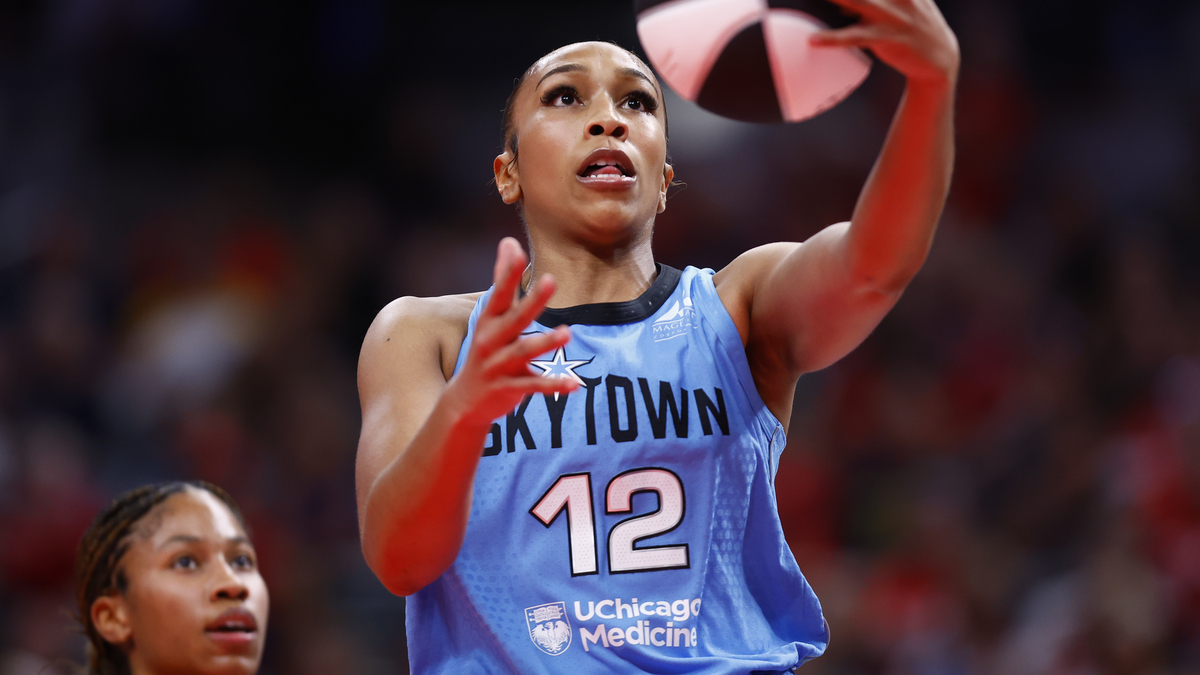
The next generation is starting to make things right: Jaquez has flashed her top five potential but the most consistent threat on the Sky ledgers has been the undrafted rookie Taylor, the 5’9 Louisville alumna who has flourished since signing a training camp contract in mid-April and now stands as one of the Sky’s starting five staples.
Taylor showed that a 30-point performance in relief against Indiana on June 11—the best bench performance any WNBA reserve has had this season—was no fluke: since entering the starting five six days later, Taylor is averaging 17.9 points and has an average plus/minus of 3.9, second among freshmen in both categories behind only the mighty Olivia Miles.
She capped off her first half in sterling fashion, scoring 31 amidst a heartbreaking loss to New York on Wednesday night. Despite the defeat, Taylor made history as the first undrafted rookie to have a pair of unexpected triple decades during her debut tour.
Connecticut Sun: C (7-20)
It’s said that the night is darkest just before the dawn. That makes it all too appropriate that this is Connecticut’s “Sunset” season.
With the metamorphosis into the Houston Comets reboot in full swing, it was always thus a bit of a pipe dream that the Sun’s Connecticut coda would end in the postseason. Leila Lacan’s late arrival due to the fulfillment of international duties certainly didn’t help, nor did the fact that the Sun’s regularly scheduled 2026 draft pick (fifth overall) resided in Chicago thanks to the unprotected, Toronto-bound Marina Mabrey, whose nightly scoring showcases would undoubtedly assist a team that was dead-last in WNBA scoring.
Even if she was kept out of the newcomers’ grasps, Mabrey’s return was never assured which put the impetus on the Sun’s incumbent building blocks. Aneesah Morrow is putting up a near-double-double in year two while Olivia Nelson-Ododa is also engaged in a career-best season, all while Lacan continues to flash her two-way potential. Unfortunately, Saniyah Rivers fell out of the starting five while Aaliyah Edwards and Diamond Miller have struggled to take advantage of an R&D year.
To be fair, the Sun has somewhat shined since dragging itself out of the doldrums of a 2-15 start. Edwards and Miller, to their credit, are averaging some of their offensive numbers despite a myriad of injuries in the case of the former. Nelson-Ododa and Brittney Griner each appear in the top eight in defensive rating over the last 10 games. That 5-5 stretch includes a win over league-leading Minnesota, albeit with Miles sidelined.
But, stationed over seven games out of the league’s final playoff spot, the only drama left on the Sun’s docket is who’s going to make the trip to Houston. Morrow’s recent absences due to “reconditioning” have raised eyebrows while the statuses of Nelson-Ododa and future free agent Kennedy Burke should also generate a few calls.
1st Half MVP: Brittney Griner
The franchise’s lame-duck nature means Griner’s fun with the Sun is destined to be part of social media’s facetious game where legends are jokingly remembered for their work in unusual colors (i.e. “Sparks legend Teresa Weatherspoon, Tulsa Shock legend Sheryl Swoopes“).
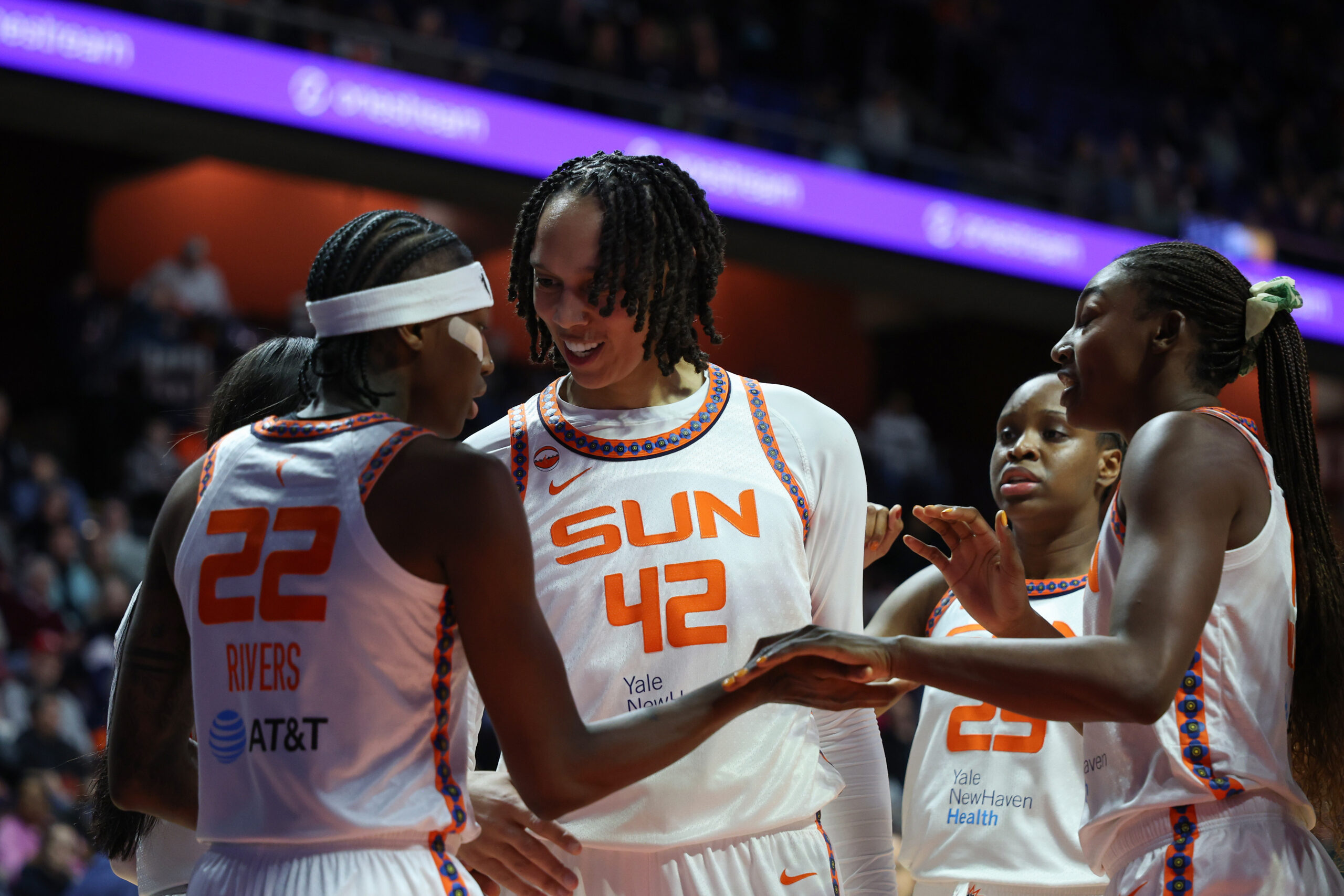
Even so, the sun also rises on Griner’s extended career, which has enjoyed an extension of sorts since she became the headliner for the Sun’s final hours. While she hasn’t been immune from the injury bug, the 35-year-old Griner has been the Sun’s most consistent threat at 14.1 points, 5.6 rebounds, and 28 total blocks, which still ranks in the top 10 despite only appearing in 16 games. She has meshed well with Lacan, as all but one of the Sun’s seven wins have come when the two have shared the floor together this season.
When all is said and done, Griner will once again play the free agency game next winter after signing a one-year deal with the Sun. However, her first steps with the franchise have made it clear that she has more reasons to stick around beyond its Texas-based destiny that will settle itself in her hometown of Houston.
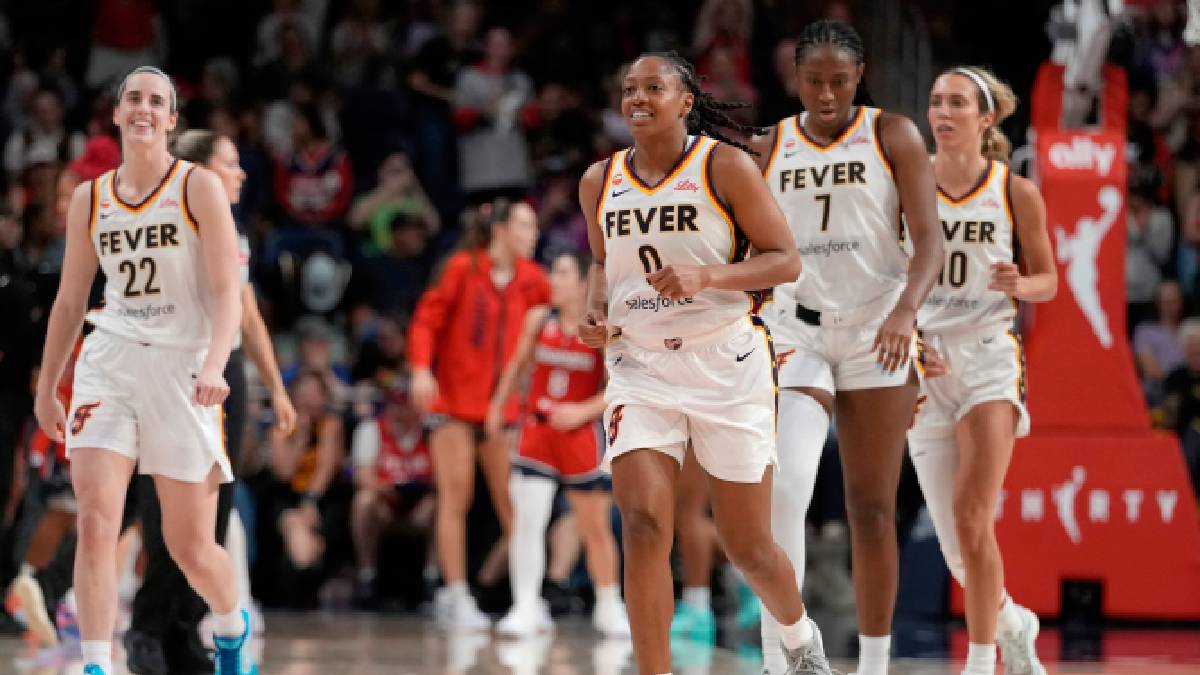
Indiana Fever: B (17-10)
What if Caitlin Clark was the problem … ?
Rest assured, this post has no intention of contributing to the increasingly unhinged narratives on Clark, who has been more than content to let her play do the talking: yes, turnovers continue to be a problem (a league-worst 4.7 per game) but Clark has rendered her lengthy sophomore absence long forgotten with new personal bests in scoring (21 per game), field goal percentage (43.5), and assist percentage (44.8).
But the Fever’s Clark-less work continues to serve as the difference in its surge up the standings: even with a brief back injury keeping her out of several crucial pre-All-Star showings, the Fever paces the league in scoring and three-point success rate thanks to the continue growth of Aliyah Boston and Kelsey Mitchell. Having come one game short of the Finals without Clark last year, their work and more was part of a 4-0 stretch while she recovered, one that has placed Indiana at the top of the East coming off the break.
Indianapolis adaptation has taken many forms: Sophie Cunningham (42.%) has become one of the game’s most potent threats from deep, Monique Billings (9.2 net rating) has fulfilled her defensive advertisement, and recency bias is but the smallest factor of Tyasha Harris’ Sixth Woman of the Year case (53.6% from the field in the last nine).
1st Half MVP: Kelsey Mitchell
After last season, conventional wisdom suggests that Mitchell doesn’t have anything left to prove to anyone. Her Clark-less takeover of the Indiana scoring ledgers fueled the unexpected playoff run and she was rewarded with her first appearance on the All-WNBA First Team. But what do you get the woman who has everything? More, especially when your team has had to navigate without both Clark and Boston at various points this year.
The game’s leading scorer beyond Wilson’s antics (23.2 per game), Mitchell has bested her scoring average from last year by over three points, she’s up over four full points on field goal percentage, she’s averaging a steal a game for the first time since 2021, and her net rating’s destined to be a career-high.
It’s perhaps hard to separate yourself from the norm when a pair of undeniably historic talents become your teammates in back-to-back seasons. But Mitchell, who has been around for the start of this Fever fracas since 2018, has made a terrific MVP case that must be considered if the Fever are able to secure a more prominent spot in the WNBA penthouse.
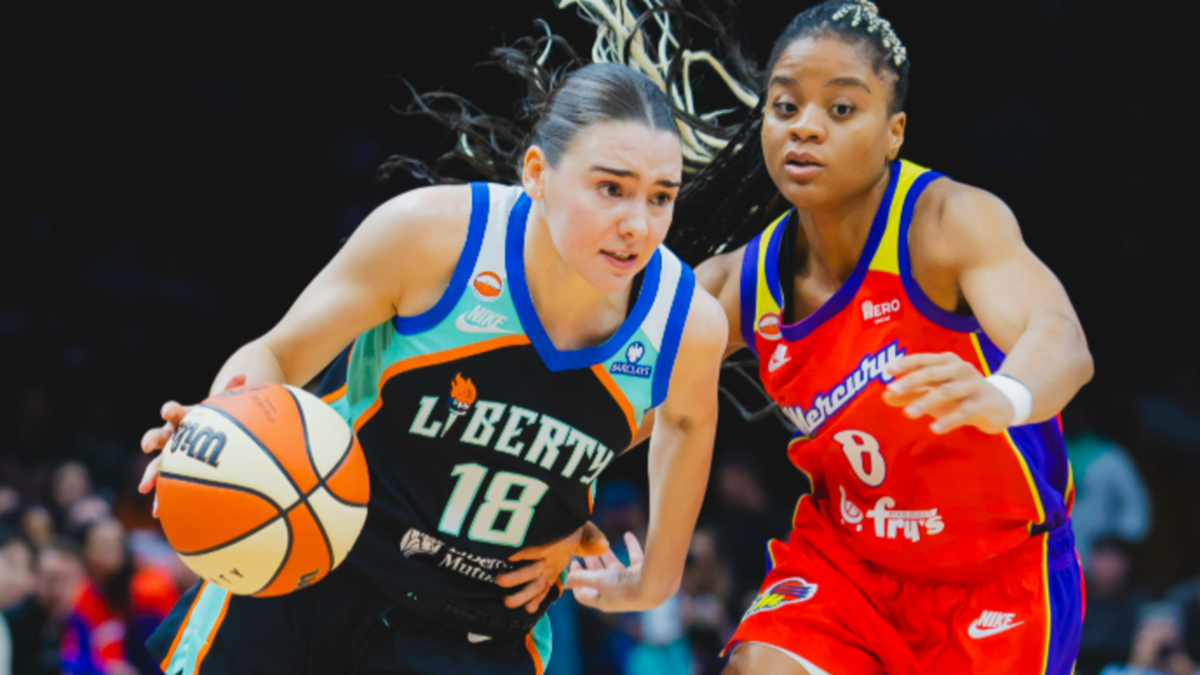
New York Liberty: C+ (15-12)
The Coney Island Cyclone has nothing on the twists and turns this Liberty half-season has endured.
A Liberty team playing at full strength has become one of the most elusive metropolitan urban legends: Sabrina Ionescu has shaken off the effects of early lower-body injuries but New York continues to work without Leonie Fiebich and Satou Sabally as it tries to make up for lost time on the postseason bracket. Even the team’s charter plane wasn’t exempt from medical maladies, as a showdown against the Dallas Wings had to be pushed back due to mechanical issues earlier this month.
Flashes of the flashy modernity the Liberty sought when it hired longtime Stephen Curry collaborator Chris DeMarco have been quite rewarding. While it has sacrificed some turnovers in the name of finesse, New York has held its own against the league’s finer opponents and even took home another in-season title. It also became the first team in WNBA history to average triple digits in its first four showings.
On the dark side, though, cohesion and consistency have been surprisingly elusive for a team that has managed to keep its primary core in tact. Equally spurred on by the injuries and the search for a smoother game, the Liberty has experimented with various lineup combinations, ones that have placed the status of tenured vets like Betnijah Laney-Hamilton up in the air. Through its first 27 games, New York has taken 147 fewer shots than its opponents, the worst net tally in such a stretch since the 2023 Phoenix Mercury.
Not one seafoam savant is going to fall back on the injury excuse and Liberty reps have essentially accepted that they’re the ones that are going to drag them out of this mess. What transpires next could well come to at least partly define the era led by Ionescu, Jonquel Jones, and Breanna Stewart.
1st Half MVP: Pauline Astier
Stewart has done Stewart things and Jones’ continued exploits from deep got them on the All-Star plane to Chicago. Jones’ MVP output in the exhibition and Ionescu’s late breakout (23 points over the final five games) should only heighten expectations for the Liberty’s second half.
However, it’s safe to say that the Liberty would be in far more dire straights if not for the breakout of Astier, who stepped into the early starting lineups when Ionescu was rehabbing.
Astier is the Liberty’s latest international woman of mystery hunted down by general manager Jonathan Kolb and his scouting department, joining the Liberty league of nations that previously showcased Fiebich and Marine Johannes. Rising from humble beginnings as a mid-April signing, Astier helped the Liberty’s backcourt keep pace with its regular production when Ionescu was reduced to a spectator.
The French phenom has headlined the new wave of freshmen that could referred to as RINOs—Rookies In Name Only—in this landmark 30th season. Entering the second half, Astier is no worse than eighth among first-year WNBA participants in points (9.7), assists (3.6), and plus/minus (2.9), and leading the rookie guards in field goal percentage (53.4, min. six shots and four games played).
Time will tell exactly what role Astier has on a fully healthy Liberty team, if only because the concept has been so fleeting. But Astier and her overseers have made it very clear that it exists, offering New York some much needed clarity on the trail of vengeance.
Toronto Tempo: B (10-16)
No matter what happens the rest of the year up north, the WNBA’s first international endeavor will be worth watching no matter due to the sheer offensive curiosity Mabrey can generate on a nightly basis.
Granted undeniable headlining duties for perhaps the first time in her career, Mabrey has run with the opportunity as one of the most unhesitant scorers on the modern W ledgers. Her early output includes entry into one of the most exclusive statistical sisterhoods the league has to offer, namely that of a WNBA record 53 points. It was perhaps inevitable once Toronto obtained the head coaching services of Sandy Brondello, one of the most prominent backcourt whisperers both abroad and domestically.
Unfortunately, Toronto’s tenure has been marred by injury: Mabrey has been a blessed staple while Maria Conde and Laura Juškaitė have emerged as reliable RINOs. But any attempt at replicating the Golden State Valkyries’ expansion success has been repeatedly stifled by injuries:
Isabelle Harrison and Nyara Sabally were on pace for career-best tours while Kiki Rice hasn’t taken the floor since early June.
That has removed the Tempo’s top three rebounders from the fold, placing them second-to-last in the department: of the leftovers, only Conde is pulling in at least four a game. The ensuing defensive lapses have been equally costly: combine the issues with Mabrey around, the Tempo is giving Coca-Cola Coliseum’s scoreboard a workout this season, having allowed at least 95 points on a league-worst 14 occasions this year, going 5-9 in such showings.
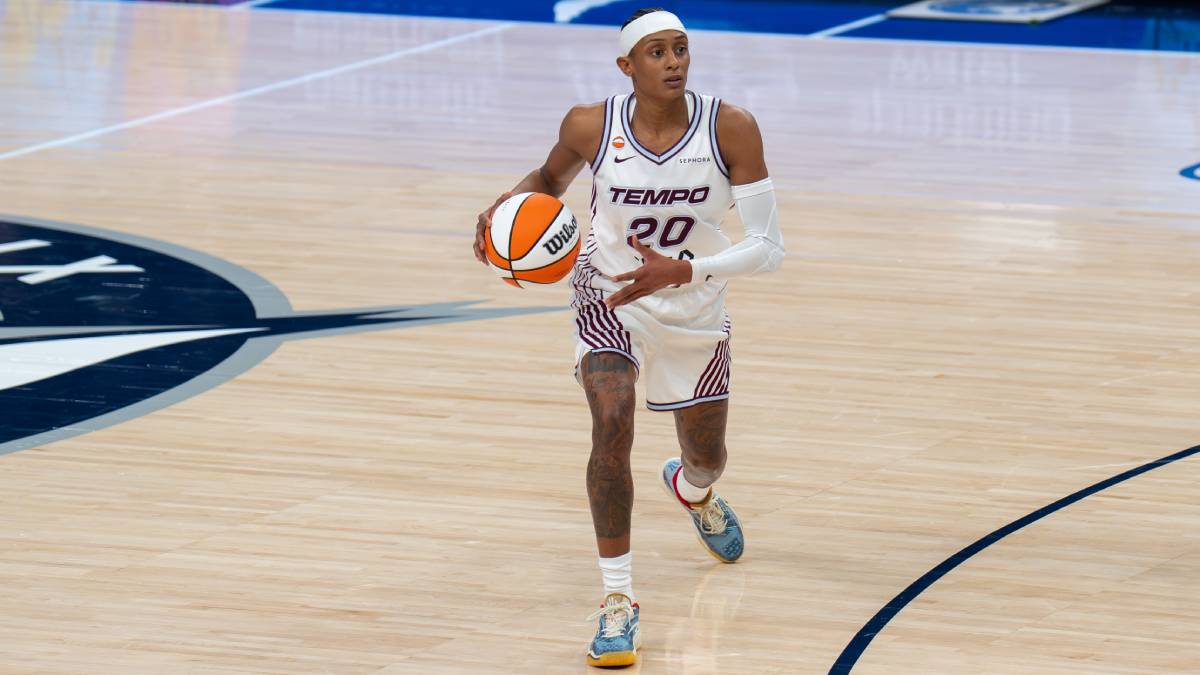
1st Half MVP: Brittney Sykes
What Mabrey has done is no doubt impressive but there’s no doubt that the Tempo hasn’t been the same since Sykes went down with a non-contact injury in June. There’s no timeline on her return, though the probability of a 2026 comeback perhaps shrinks with each passing Toronto loss.
Sykes’ conventional numbers speak for themselves: she was averaging a double-decade for the first time in her career and her success rate from the field was four points better than last year’s shared effort between Washington and Seattle. It’s not often, if ever, that an expansion club lands one 20-point scorer, never mind two. Working with Mabrey could’ve been one of the most dangerous duos the league had seen in quite some time.
For the time being, however, Sykes is perfectly defining the middle initial of MVP for better and worse, evidenced by the Canadian ledgers in her absence: in the first 14 games prior to her injury, the Tempo was tied for the third-fewest turnovers in the league. In the dozen since, they’ve endured the third-most. Toronto also dropped from the fourth-best pace in the league to seventh, rendering a trip down the playoff grid (four games behind eighth-place Washington) hardly coincidental.
Washington Mystics: B+ (14-12)
The kids are all right and then some.
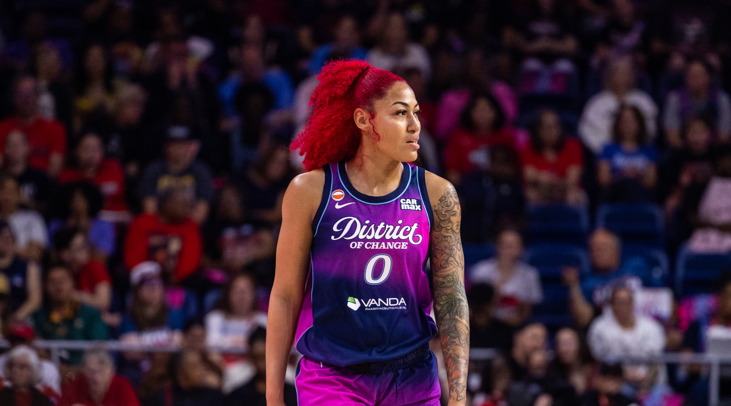
Few teams in modern professional sports have been blessed with a opportunity to play such healthy reckless abandon than the modern Mystics, a team where the supposedly seasoned veterans are Michaela Onyenwere and Shakira Austin. Having conjured up a plethora of picks since their last postseason showing in 2023, the Mystics went into this season with an average age of less than 24, the youngest such digits in WNBA history.
The efforts of recurring All-Stars Sonia Citron and Kiki Iriafen speak for themselves, forming a formidable duology that’s handling business on the inside and out. Austin’s breakout has further paced Washington’s young grit while Onyenwere has brought over her collegiate coaching expertise on an on-floor setting. The most prominent dividends came just before the break: Washington won four of six and six of nine, capping off the stretch with back-to-back wins over Golden State and Las Vegas.
That has, in turn, allowed the Mystics to be a little patient with their high-profile rookies rather than throwing them into the proverbial fire in the name of making a playoff case. Such an approach has indeed been a virtue in the early returns: Lauren Betts and Cotie McMahon rank second and fourth in rookie defensive rating (min. 10 minutes per game) while Georgia Amoore is tied for second in assists with Astier under the same criteria (3.6).
It has been enough for the Mystics to create a 3.5-game separation ahead of the ninth-place Fire. There’s nothing to suggest that the Mystics would be able to swipe a playoff series from the league’s elite (though they’re a respectable 3-3 against Minnesota, Golden State, and Las Vegas) but that was never the goal this year. The fact they’re even threatening to crash the postseason party is win in of itself for this young group, which includes head coach Sydney Johnson.
1st Half MVP: Shakira Austin
When it comes to the Most Improved Player election, stop the count.
When Austin was granted a multi-year offer sheet by the Toronto Tempo, few would’ve blamed the Mystics for parting ways: Austin carried sterling potential in her first and fourth seasons but was a frequent victim of the injury bug after placing second in 2022’s Rookie of the Year vote. Add Betts’ arrival to the mix and it seemed like the perfect time to make a clean break.
Instead, Washington matched the offer sheet and the rest could well be history: Austin has rewarded the Mystics’ faith with career-bests in all major categories as she and Iriafen have staged quite the battle in the rebounding chase. Over the last 11 games, Austin is one of two players on the WNBA ledgers to average at least 15 points, 10 rebounds, and a block, the other being reigning MVP A’ja Wilson. Austin is one of seven players to have put up at least 10 double-doubles in the early going.
Geoff Magliocchetti is on X @GeoffJMags
Editor’s Pick

The post WNBA 2026 First Half Grades: Eastern Conference appeared first on Ballislife.com.