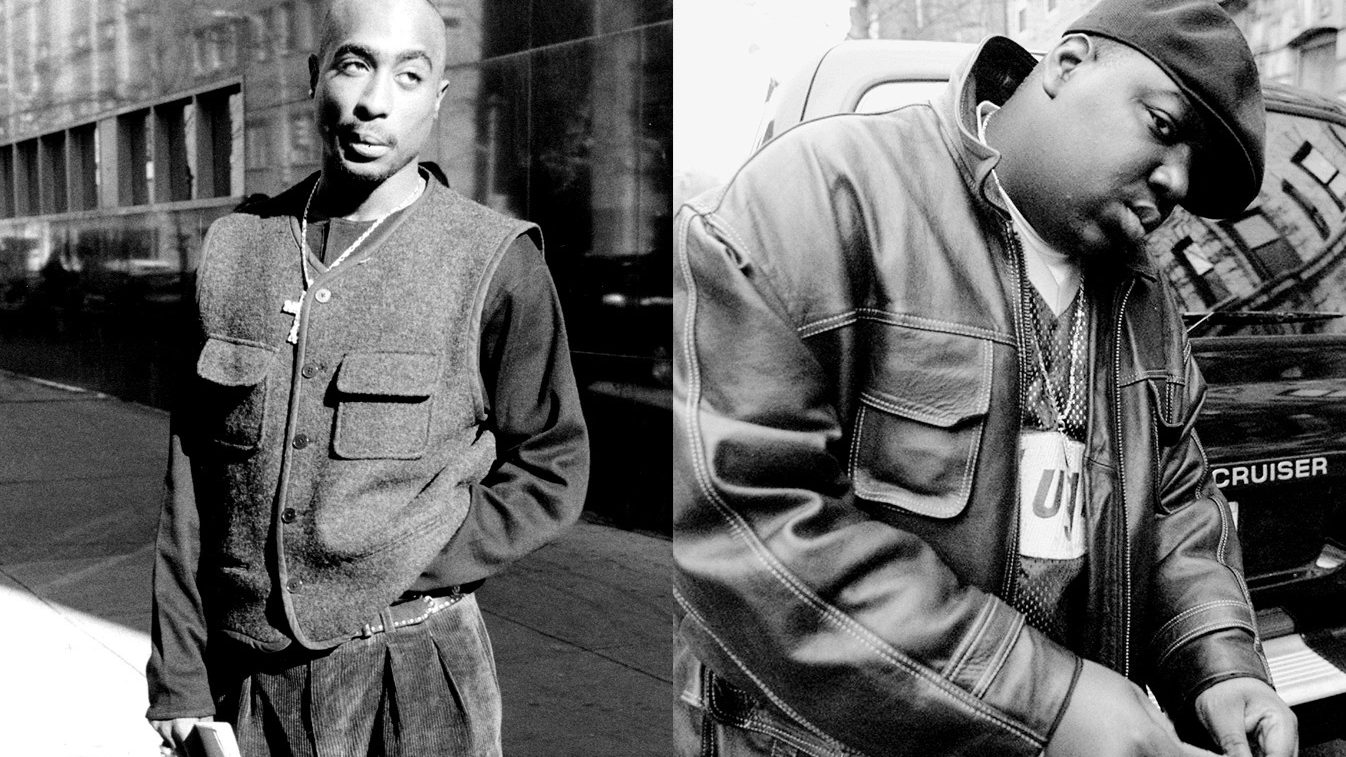
Closure can never be anything other than subjective.
Finding “it” doesn’t erase the past. It doesn’t promise a future without pain. And it can never resurrect a loved one.
Regarding Tupac Shakur — one of history’s most beloved multi-hyphenates and most famous murder victims — such is certainly the case. Shakur is omnipresent. His music remains a fan favorite across streaming and social media. His interviews have become scriptures. His movies are a painful reminder of just how massive his once-in-a-lifetime talent was.
Tupac Shakur is a relic of a world that no longer exists. Nearly 30 years after his death, that world is being reconstructed in a courtroom.
Early in the ongoing trial of Duane “Keffe D” Davis for the 1996 slaying of the rap icon, a moment occurred that will likely be overshadowed by the case itself. It wasn’t a grand reveal; not a bombshell, decades-old audio recording of Davis detailing his alleged role and that of others in the final moments of Shakur’s life.
It was, quite simply, a family reliving a trauma they’ve never been able to escape for nearly the past three decades.
Gruesome autopsy photos were shown. They featured Tupac in a body bag, revealing entry and exit bullets wounds from the shooting at the corner of Koval Lane and Flamingo Road in Las Vegas. The fatal encounter occurred hours after an altercation with Orlando Anderson, a nephew of Davis’ from Compton’s Southside Crips.
This was Tupac, as full of life as any person to ever live, lifeless.
Very few violent deaths have tattooed the American consciousness like Shakur’s. For his older stepbrother, Mopreme, and younger half-sister, Sekyiwa, they were again unable to protect the sibling they long shared with the world.
In that moment, the only thing the Shakur family — one of the most consequential in American social justice history — could do was simply walk out of the courtroom.
“I want my little brother back,” Mopreme said earlier this month.
“Unfortunately, our family, because of our history in America, we have no expectations, or low expectations, of the criminal system when it comes to hunting down someone for my brother’s murder,” Sekyiwa told Law & Crime recently. “Black boys, young Black boys, and their lives, their deaths are routinely swept under the rug.”
Tupac has been dead for nearly 30 years, yet he’s never stopped being their sibling. The great majority of families grieve in private. An Instagram photo or story here and there, and the world, generally speaking, moves on. Tupac’s family has never been granted that gift.
Mary-Frances O’Connor, a renowned psychologist who studies grief at the University of Arizona, calls this a “continuing bond” — the internal relationship people maintain with someone after that person is no longer part of their physical world.
“Continuing bonds is an important part of grieving,” O’Connor said. “But a continuing bond is also a shared social reality: how we talk about who our loved one was and what their lives meant with others.”
For most families, that relationship belongs largely to them. For Mopreme and Sekyiwa, it exists alongside the world’s relationship with Tupac. Their memories of their brother have had to coexist with everyone else’s longing to hold onto Tupac — the myths, the music, the movies, the books, the theories and the coping mechanisms to explain his death.
Tupac, in many ways, has become a public figure whose legacy belongs to millions.
His music meant too much; his words are literal tattoos. In a celebratory sense, Tupac never died. But with every book, documentary, conspiracy theory, and headline, it’s reliving the moment all over again. Now, his family sits in a courtroom and listens to the legal system rehash their brother’s final moments — and scrutinize everyone who played a role, Tupac included.
O’Connor admits that a loved one dying by murder brings “specific and unique challenges” to the family’s grieving. A public loss only compounds emotions, especially with a legal proceeding of this magnitude under such a bright spotlight.
“These intense reactions can be reawakened when there are additional triggers like a new trial,” O’Connor said. “On the other hand, building a meaningful life often includes setting goals like educating the public about the circumstances of murder, contributing to community justice efforts, and ensuring the legacy of the person who died, often far too young.”
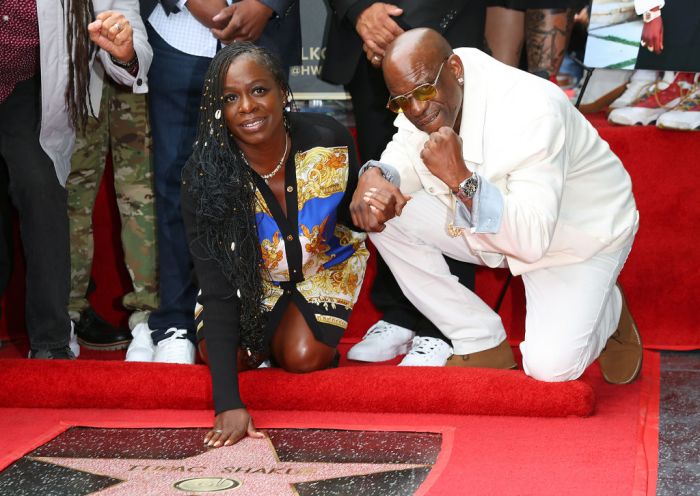
Leon Bennett/Getty Images
Sekyiwa and Mopreme remain among the few people who can speak to the person Tupac was beyond the public figure, before the documentaries, conspiracy theories and cultural mythology took hold.
What ultimately stands is the question of how justice presents itself in 2026. A guilty verdict doesn’t bring Tupac back. Nor does an acquittal.
O’Connor is quick to caution that a verdict is just that: It’s a decision made in court with legal consequences.
“Closure is an experience that our culture often suggests is possible in bereavement, but it often does not look like what we are led to believe as bereaved people,” she said. “Rarely is there a time when waves of grief do not ever occur, even years after a loss, but this does not mean there is anything wrong with the grieving process.”
More than 50 years ago, a pregnant Afeni Shakur fought for her freedom in the Panther 21 trial. She was acquitted in the courtroom, a month before Tupac was born, but she rarely ever found peace in her life. The same goes for the son she carried in her belly, even long after his death.
For the Shakur family, skepticism in the American criminal justice system has long been both a family heirloom and a painful oxymoron. So, for the living descendants of said name and for those fighting against the American criminal justice system, hopeful confidence isn’t part of the family’s legacy.
Hearing account after account in the courtroom is the latest exercise in Tupac mythology that his siblings are all too familiar with. The chain of events that led to Shakur’s death has long read like a great American mystery. Every character matters — main or ancillary, living or dead, free or incarcerated. Who’s lying, and who’s the closest to the truth that matters to Mopreme and Sekyiwa?
For them, it is far less a mystery than it is a gaping absence.
Perhaps this is beyond simply seeking justice. Tupac’s murder was still fresh 30 years ago when it appeared on Unsolved Mysteries. As his legend grew after his death, his siblings were left to grapple with how abruptly his story ended. He never got to be an uncle to their children. There is a tug-of-war in wanting the truth while searching for it within a system historically at odds with the last name Shakur — and especially the first name Tupac.
The surviving siblings have shared their brother with the world. His triumphs and mistakes were played out on the global stage. Perhaps they’ve asked the same questions about his final hours that we all have.
“Where I do find justice,” Sekyiwa said, “is in all the people that’s been inspired by him.”
The post How long will they mourn Tupac? appeared first on Andscape.
Leave a Reply