
President Donald Trump has a problem with Alaska’s Senate election, and apparently, he thinks voters do, too.
With two candidates named Dan Sullivan on the ballot, Trump’s administration appears to believe Alaskans might not understand the word “incumbent.” Now, his Justice Department is asking a federal court to block certification of the results under certain circumstances if the Republican senator loses.
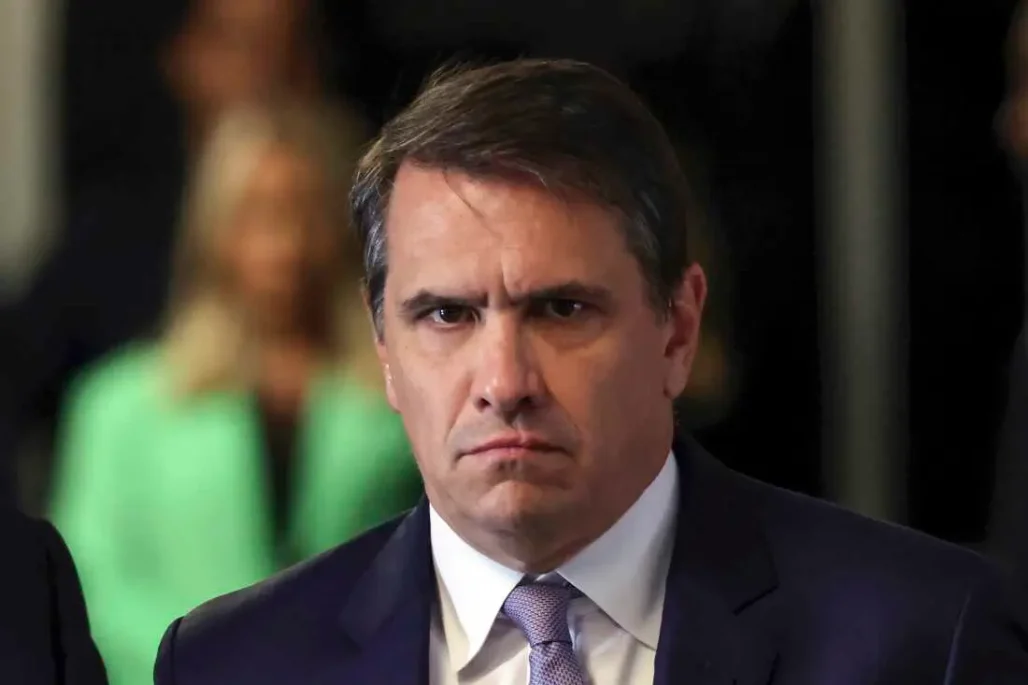
However, when a television interviewer confronted Attorney General Todd Blanche about what his own department’s lawsuit actually says, he lost patience.

The extraordinary dispute over Alaska’s Nov. 3 Senate election has escalated into a fight over whether the Trump administration is preparing to challenge an unfavorable result before voters have even finished casting their ballots.
Trump has acknowledged ordering the Justice Department to file the lawsuit, while Blanche has angrily rejected suggestions that the administration is laying the groundwork to overturn an election.
Black Man Sues Texas Police Chief Who Grabbed His Throat Over Stop Signs He Says He Never Ran
NYC Took Black and Hispanic Homeowners’ Properties Without Warning, Now a $60M Payout Looms
Election experts, Democrats, and even Alaska’s other Republican senator, Lisa Murkowski, have criticized the legal challenge, saying the state has already taken steps to distinguish the candidates on the ballot.
The flashpoint came Sunday during an appearance on CNN’s “State of the Union,” where anchor Dana Bash pressed Blanche about the administration’s intentions and his earlier comments that the Justice Department could intervene in election certification under a “doomsday” scenario.
Asked whether the lawsuit was setting the stage for Trump to challenge the midterm results, Blanche rejected the suggestion.
“We’re not laying any groundwork for the president to do that,” Blanche told Bash, according to NPR.
“President Trump is not trying to take over a state election in any way, shape, or form,” he added.
But the discussion grew heated when Bash connected his remarks to the aftermath of the 2020 election results and the Jan. 6, 2021, attack on the U.S. Capitol.
“Oh, you got to stop it with that. You are not being a real person. Come on, man,” Blanche replied, calling the suggestion “crazy.”
The exchange came as the administration faced questions about a lawsuit asking a federal court to block certification of Alaska’s Senate results if Republican Sen. Dan Sullivan loses and an investigation finds that votes cast for the other Dan Sullivan would have changed the outcome.
Trump has publicly taken responsibility for the legal action. “I’m the one that said do it,” he told reporters Friday as he arrived in Florida for a campaign rally.
The administration says Daniel J. Sullivan Jr., a retired schoolteacher from Petersburg, Alaska, could confuse voters who intend to support the incumbent senator. Republicans have accused the challenger of running as a spoiler to siphon votes from the senator, allegations the challenger has denied.
The race matters because Democrats see a chance to flip the Republican-held seat and potentially shift the Senate balance of power. Former Democratic Rep. Mary Peltola is challenging Sullivan in a contest rated a toss-up by the nonpartisan Cook Political Report.
Yet Alaska has already taken steps to distinguish the candidates on the ballot. The ballot lists the incumbent as “Dan S. Sullivan,” with the labels “(Registered Republican)” and “Incumbent,” while it identifies the challenger as “Daniel J. Sullivan Jr.” without a party affiliation.
Blanche argued that the case concerns whether Alaska violated federal law by allowing a potentially confusing ballot to proceed, not whether the president can take control of a state election.
“It is an obligation of the states to avoid confusion, among other things, confusion in the minds of voters in the election process,” he said.
He also argued that an earlier Alaska Supreme Court decision allowing Daniel J. Sullivan to remain on the ballot did not resolve the federal questions raised by the lawsuit.
But the Justice Department has not explained how it could determine after an election whether voters who selected the challenger actually intended to vote for the incumbent. Because ballots are secret, election experts have questioned whether such an investigation could reliably establish voter intent.
The department’s lawsuit cites the National Voter Registration Act of 1993, pointing to language about protecting the integrity of the electoral process. Critics say that language provides a weak legal foundation for an extraordinary request to halt certification.
Derek Mueller, a law professor at the University of Notre Dame, wrote in a legal analysis that “The legal claim is so absurdly thin, there’s essentially no likelihood of success.”
The controversy spilled into a separate televised exchange with CBS News “Face the Nation” anchor Margaret Brennan, who challenged Blanche over the language in the Justice Department’s filing.
“The DOJ lawsuit demands the Alaska result not be certified if voters are confused. The confusion is defined as Sen. Sullivan not winning,” Brennan said.
“That’s not what it says,” Blanche replied.
“I’m quoting from it. You are telling them not to certify it. What right does the federal government have to tell a state not to certify?” Brennan asked.
The lawsuit itself says there is “a substantial likelihood that a certification of the election will reflect an electoral process that lacked integrity” if votes were affected by confusion over the candidates. It seeks to pause certification while the government investigates whether votes for Daniel J. Sullivan were actually intended for the incumbent senator.
Trump has repeatedly complained about the race and Alaska’s ranked-choice voting system, calling the system a “scam.” In a Truth Social post, he described the contest as “totally confusing” and complained that a court had not stopped what he called a “SCAM.”
The backlash extends beyond Democrats. Republican Sen. Lisa Murkowski, who has supported her colleague’s reelection, said Alaska voters do not need federal intervention.
“Alaskans don’t need any help voting for their preferred candidates, and the state of Alaska has already handled this by clearly distinguishing the candidates on this year’s ballot,” she wrote on social media. “The Department of Justice should never have filed this lawsuit.”
Peltola has described the lawsuit as “a distraction” and “corruption,” arguing that it reflects an effort to preserve Republican control through federal intervention.
Online critics were similarly scathing, with one saying, “The shamelessness is breathtaking,” about the administration’s position.
Another summarized the argument as an insult to voters: “Translation: We Republicans think Alaska voters are too stupid to tell the difference between 2 identical names even when 1 is clearly identified as the Republican/Incumbent.”
A third questioned how the administration could prove that the names had confused voters: “Blanche is playing us for fools. How can anyone possibly measure the level of voter confusion or voter non-confusion in an election? Is he planning to survey every individual voter? Or is he just going to identify people registered with one party who voted for the other party’s candidate and then claim they must have been ‘confused’?”
Attorneys representing Peltola’s campaign and the Democratic Senatorial Campaign Committee have filed a motion asking a federal judge to dismiss the case, calling it “an unprecedented pre-emptive strike on democratic elections.”
With early voting underway and Election Day approaching, the court has not yet set a hearing date.