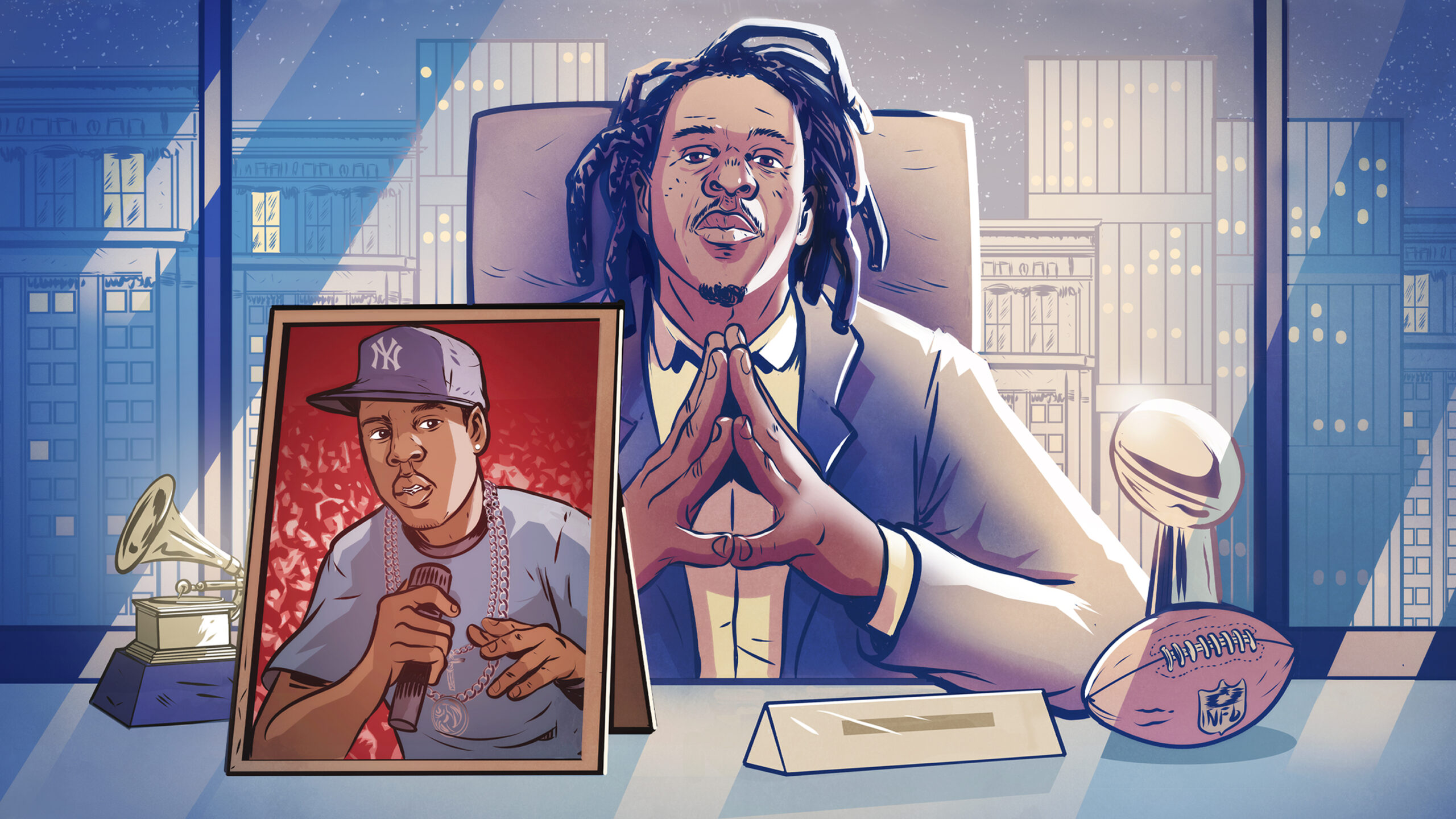
PHILADELPHIA — The most telling moment from Jay-Z’s nearly 90-minute Roots Picnic performance isn’t the freestyle everyone’s talking about.
In between verses from “Public Service Announcement” — which he dubbed the “Black national anthem” — Jay-Z uttered four words that didn’t just explain his night. Rather, it explained why 2026 is, in his words, all about offense.
“I miss this s‑‑‑.”
Saturday night in Philadelphia couldn’t have gone any more perfectly for Jay-Z. But that line lingers. It was surprise guest after surprise guest. It was Jay proving that, even after almost a decade away from performances of this magnitude, his stage presence, attention to detail, and understanding of the moment remain second to none.
For a moment, put aside the billions, the businesses and his role as the architect of the modern Super Bowl halftime show.
This was an artist reminding himself, and everyone else, of what the empire has always been rooted in: rapping. And rapping at a ridiculously high clip, one few MCs have ever flirted with.
It’s a simple truth, yet one that guided the thousands who descended upon Belmont Plateau in Fairmount Park.
Truth be told, Jay’s Saturday night began well before he hit the stage. Every decision in 2026 has been part of a larger — pun intended — blueprint. The catalog drops he’s steadily released all year, and the GQ interview, were all tools of mass hysteria. Jay’s presence in Philly was unavoidable all weekend. Songs blasted out of cars. Custom-made shirts and hoodies were impossible to ignore. Debates over guests, setlist and even the possibility of new music became conversation icebreakers.
When Jay-Z is active, hip-hop breathes differently.
Over the past 30 years, albums and guest verses have become snapshots of time. Tours and evolving power beyond the booth became calling cards for Jay’s shifting commentary on the American Dream.
He once owned fourth-quarter release schedules and commanded summers each year. But for the last almost decade, Jay-Z, the musician, lived only in memory. Musical scarcity made guest verses on songs like Meek Mill’s “What’s Free” or DJ Khaled’s “God Did” cultural touchstones. But better than anyone else, Jay understood anticipation was perhaps the most important ingredient. Nothing combines nostalgia, expectation and chaos quite like anticipation.
Roc Nation
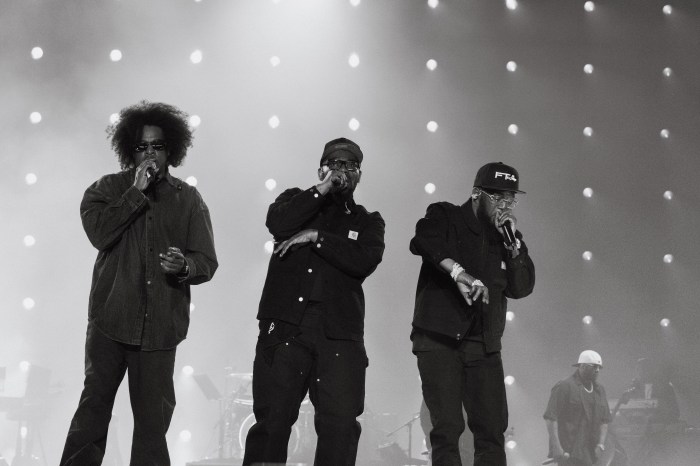
This wasn’t an appearance or a set. This wasn’t just a concert. This was an event. Having his first performance — before July’s trio of Yankee Stadium shows — was intentional. Roots Picnic is billed as a festival rooted in musicality and Black cultural appreciation. The city and the festival understood the significance of the moment. If New York is the city that made Jay-Z, then the argument could be made that Philadelphia is the city that appreciates him more than any outside of his home base.
One of the night’s most powerful developments is what ultimately became a State Property reunion with Beanie Sigel, Freeway, Peedi Crakk and the Young Gunz. Telling the story of Jay’s life and times without Philadelphia is a disingenuous endeavor if one ever existed. Hearing records like “You, Me, Him, Her” or “What We Do” in that setting, in this city, was euphoric. For a sliver of time, Roc-A-Fella Records felt as close to whole as it’ll ever be again.
That’s because the night wasn’t solely about Jay, and was far more about collaboration than a vanity project. Questlove promised Jay’s performance would be a “custom one-of-one show.” Aside from Memphis Bleek, every musical guest was a Philadelphia native. Jazmine Sullivan singing the hook on “Feelin’ It.” Bilal brilliantly karaokeing Frank Ocean’s hook on “No Church in the Wild.” Meek Mill performing his “Dreams & Nightmares” intro while simultaneously dubbing Jay “the greatest of all time” every chance he got. The aforementioned State Property and the medley of classic records they performed. This was a love letter to Philadelphia written in real time.
“That was the best Roots [Picnic] performance I’ve ever seen, and I’ve been to like seven straight,” said Philly native and lifelong Jay fan John Jervay. “The city has been wild and dangerous. Last night was Philly at its best, and it’s only right Hov brought it out of us.”
Roc Nation
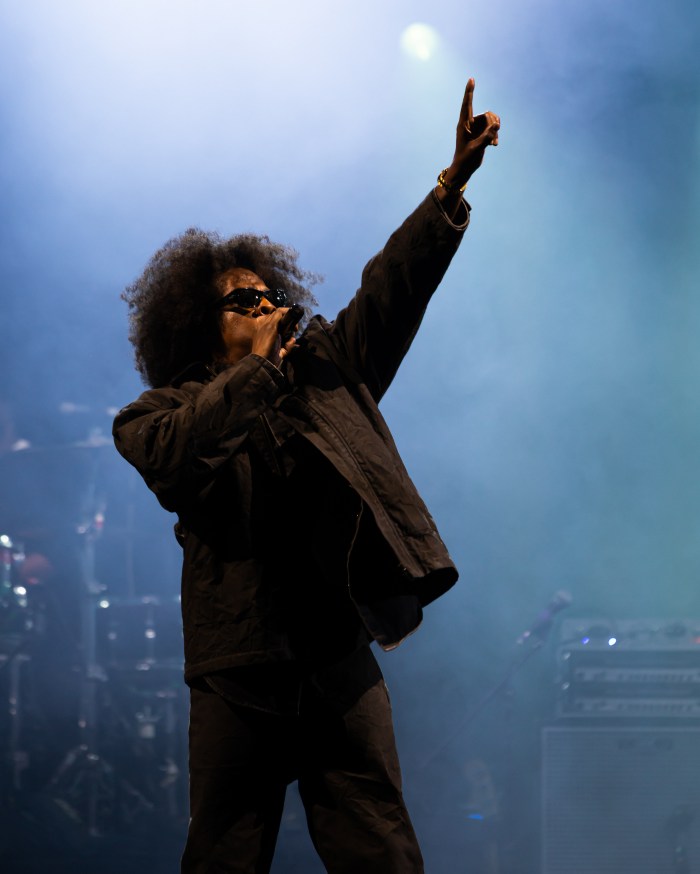
Nevertheless, for as beautiful as a letter is, it meant nothing without the ink to write it. At 56 years old, Jay-Z isn’t just commendable. He’s still a franchise player. The breath control was ridiculous, as was the stage command. Moving at his own pace and bringing the crowd along for the ride was, too. Confidence bled into precision.
The already-vaunted four-minute freestyle was a reminder of vintage Jay. A reminder that no one should be fooled by his bank account or Beyoncé. He’s still the Jay that battled in smoke- and gun-filled rooms with DMX. He’s still the Jay who rhymed alongside Big L and Biggie Smalls. He’s still the same Jay who took shots at Big Pun and waged all-out war with Nas — the latter being the century’s most high-profile battle until Kendrick Lamar decided to watch the party die in 2024.
Intimidation has never fit his bill, because he’s one of the few to engage in war and live to see the other side. Drake. Dame Dash. Nicki Minaj. Jaguar Wright. Kanye West. Tory Lanez. Attorney Tony Buzbee. If his name left your mouth with a halitosis stench, you weren’t going to like the breath mint he returned with.
Just weeks ago, Jay questioned the long-term viability of beef in hip-hop in speaking with journalist Frazier Tharpe. A smokescreen or not, those comments have now aged like milk.
My next update, The Jig is Up/ N‑‑‑‑, I’m up 10/ Wrong chart, champ, you gotta look up again/ N‑‑‑‑s looked up to Hov/ I never looked up to them, Jay rhymed, seemingly taking direct aim at Drake, who referenced him on his recent Iceman album. Them crackers got your publishing, gangsta, go talk tough to them/ Don’t talk success to me/ You n‑‑‑‑s is workers/ In perpetuity is how your contract is worded.
Chef’s kiss.
The conversation around Jay now sounds similar to the one around his close friend, LeBron James. How can this guy, at this age, still do this? Performing as a rapper is a physical sport. It’s breath control, physical stamina and memory recall while constantly reading the room.
Performing rap without background tracking is a full-contact sport. Public perception of Jay-Z over the better part of the past decade has centered on aspects of his multihyphenate life that didn’t concern recording studios. Saturday, and perhaps an entire summer to come, served as pristine Cliff’s Notes as to why the artist actually came first. He looked comfortable to be back in a place that for so long felt so permanent — until it wasn’t.
Roc Nation
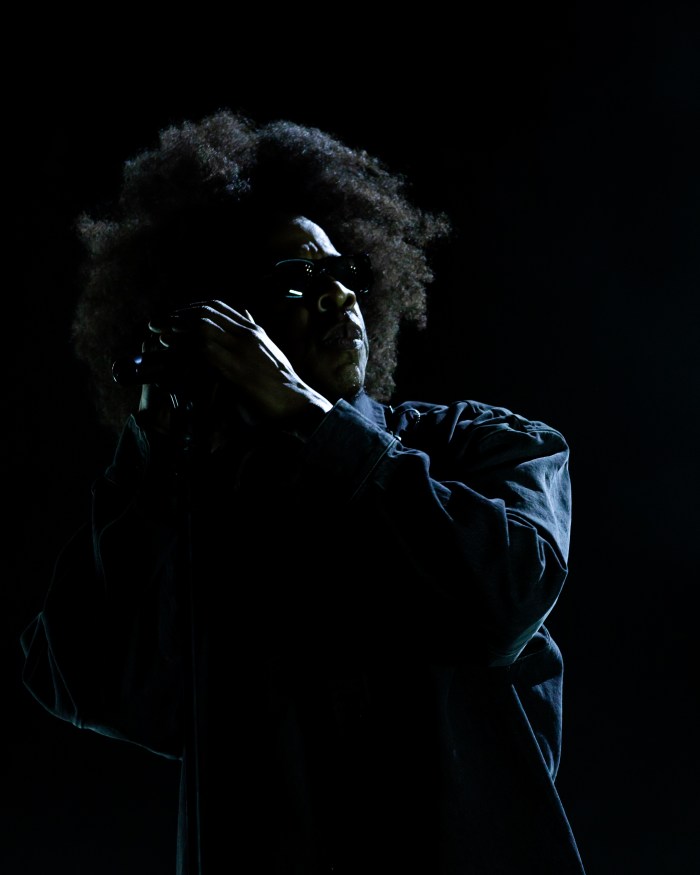
At one point, Jay requested a microphone stand be brought on stage before performing “Can I Live.” It was bluesy. It was soulful. It was how a record of that caliber should be experienced.
But it also had to be sort of an out-of-body experience. When Jay recorded that song for 1996’s Reasonable Doubt, life as we know it was totally different. Music had to work. Hustling had served him well, but there was no long-term play there. There was desperation to make Reasonable Doubt work. Dame Dash was still very much a part of the story then. Now, 30 years later, there stood a 56-year-old billionaire in musical catharsis, lamenting the paper chase his 26-year-old self had begun.
Part of the sale that is Jay-Z is the effortlessness that comes with buying into the story he’s spent the last several decades selling. A hustler disguised as a rapper. A guy who seemingly won in every part of life. A guy who transitioned from a game that normally transitions its workforce (the drug game) to another game that essentially does the same (the music industry).
As the crowd rapped to records like “Where I’m From” and “Never Change,” Jay’s words weren’t just opportunities for call-and-repeat.
These lyrics deeply resonated with those who rapped them with just as much intensity. Many in the crowd carried these songs for decades. Jay’s lyrics survived marriages, divorces, prison, death and finding happiness all over again.
Everyone in the crowd had a different story. One couple whose first date was a Jay-Z concert 25 years ago swayed together, taking in the full-circle moment. Another chainsmoked blunts, recording on his phone while constantly muttering to himself, “I can’t believe this s‑‑‑.” Another who kept yelling, perhaps hoping Jay himself would hear, “These ain’t just bars, n‑‑‑‑!” This was beyond nostalgia. These were invisible tattoos that had woven into the fabric of their lives.
What Jay-Z managed to do Saturday night was remind everyone, including himself, what “the main thing” is and will always be. The irony of Jay’s set is that it comes on the heels of so many conversations around him that made him the cultural power broker he is today. But before the boardrooms, wealth, and influence was an artist who could command a stage with an unrelenting, God-given talent.
Hence why the confession matters.
“I miss this s‑‑‑ … I ain’t gon’ lie.”
The number of times left to see Jay-Z perform live is extremely limited. Though his summer just tipped off, don’t expect too many more summers like the one he prepares to embark on. Better yet, it’s more reasonable to convince yourself this won’t happen again. This isn’t a retirement tour or a victory lap.
For one night, Jay-Z was simply just a rapper again. If his smile revealed anything, Jay-Z missed this just as much as the crowd missed him.
The post When Jay-Z became a rapper again appeared first on Andscape.
Leave a Reply