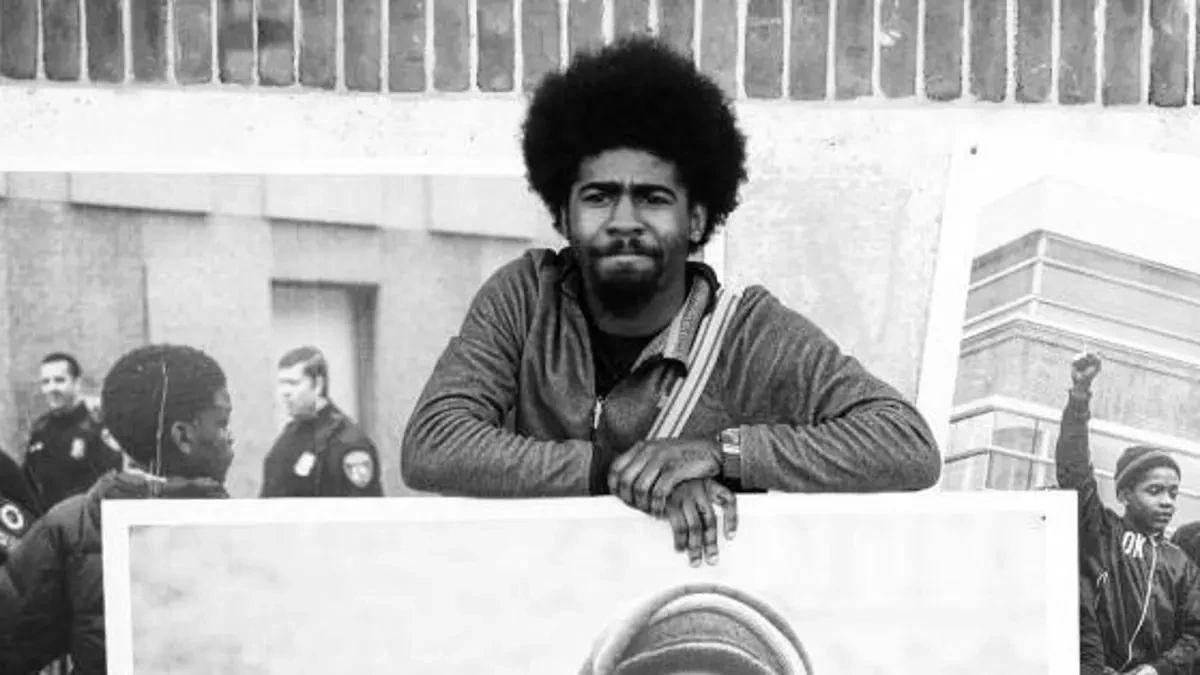
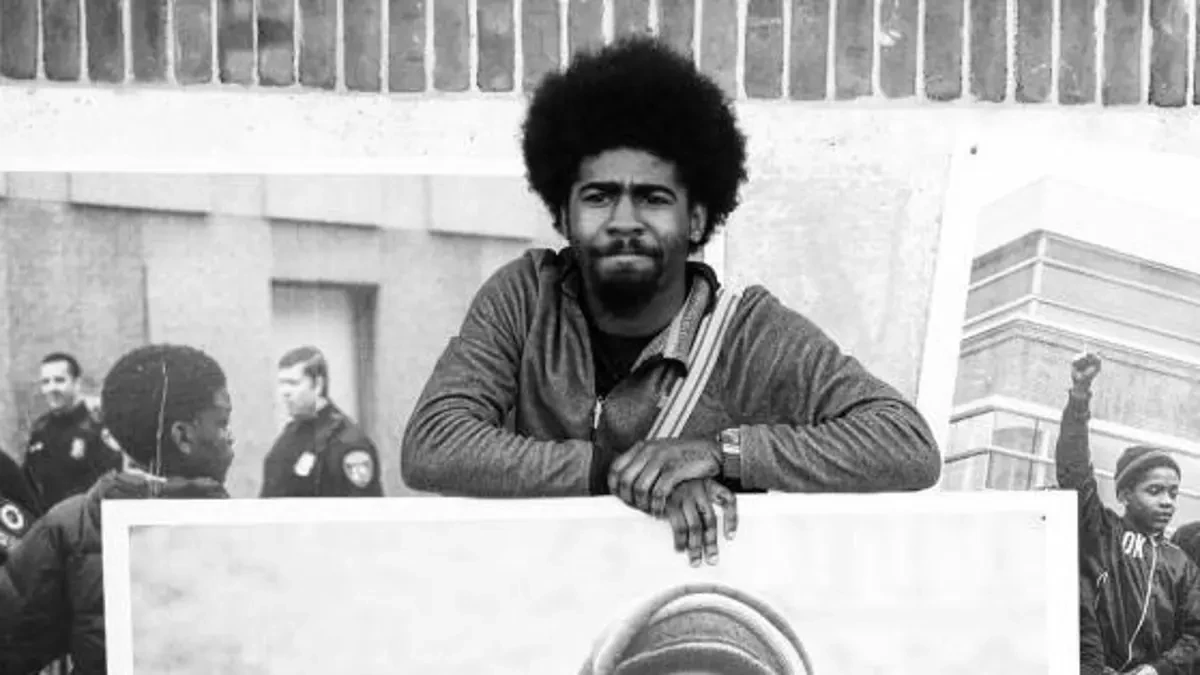
Photographer Devin Allen thought someone was trying to scam him when he learned that a woman he had never met had left him money in her will.
Instead, the unexpected gift came from a stranger who had followed his work for years and wanted to support the artist whose photographs had moved her.
Allen received money from the estate of Tamara Baran, a woman whose connection to him began when she encountered his photography on Instagram in 2015.
Baran, who had lived in several states throughout her life, was deeply affected by his images documenting racial injustice and the protests that followed the deaths of Black Americans, including Freddie Gray and George Floyd.
The approximately $3,000 arrived during a particularly difficult period for Allen, who has been grieving the loss of his mother while helping care for his grandmother, who has dementia. He told WBAL-TV 11 that the unexpected gesture renewed his motivation to continue creating art and supporting young people in his Baltimore community.
Retired NYPD Cop Still Free Despite Murder Charge In Black Father’s Road-Rage Killing
“We have never met,” Allen said of Baran. “I didn’t know her, but you know, her partner and the family and the lawyer said that she had left some money for me in her will. … I thought it was fake, but it wasn’t fake.”
Allen signed the estate paperwork and received the check this week, according to the reports. He plans to put the money toward renovations at his grandmother’s house, where he grew up, as he works to transform the property into a photography studio and art gallery.
Eventually, he hopes to open the space to young artists who need somewhere to develop their skills and share their work.
For Allen, the gift offered a reminder that creative work can reach people far beyond the communities where it originates.
“To have someone that I’ve never met love the work and then have the work affect them in that way, it was really inspiring to me,” he said.
Baran’s longtime partner described her as someone who cared deeply about people facing discrimination and mistreatment. She grew up in Detroit during the 1970s and 1980s before moving to Charleston, South Carolina, and later Utah.
Her partner said Baran had witnessed people being treated unfairly because of their race, including by law enforcement, and felt anger over the deaths of Michael Brown, Gray and George Floyd.
When Baran discovered Allen’s photographs online, his documentation of racial injustice resonated with her. Her partner said Baran regularly tried to help people who were bullied or pushed aside, believing they deserved support and an opportunity to be heard.
“Tamara always went out of her way to care for the bullied or the oppressed and help them find a voice,” her partner wrote. “I’d like to think this contribution is Tamara’s way of showing kindness and hope in a cruel world, even after she has left it.”
Allen’s work has often focused on communities and experiences that receive national attention only after tragedy. Raised in West Baltimore, he began exploring photography after borrowing a camera from a friend to photograph the city’s poetry scene.
His grandmother later purchased him a Canon camera on credit from Best Buy in 2013, helping him take his interest further, according to NPR’s reporting on his career.
As he studied photography, Allen became interested in the work of Black photographers, particularly Gordon Parks, whose images confronted poverty, racism and discrimination. Parks famously described his camera as a weapon against the injustices he opposed. Allen said that idea helped him understand how photography could become a tool for documenting problems that might otherwise go overlooked.
“I lived in this kind of false world where, like, ‘this is it — I can’t change anything.’ … But, when I started to unpack those things, I became an artist, and the art form gave me my voice. I started understanding that I do have a platform to make change,” Allen said.
In 2014, Allen photographed a protest sparked by the police killing of 18-year-old Michael Brown in Ferguson, Missouri.
The following year, he documented demonstrations in Baltimore after Gray, 25, died in police custody. Allen’s photographs spread widely online, bringing national attention to the protests and eventually landing one of his images on the cover of Time magazine.
His photographs from the aftermath of George Floyd’s death also appeared on the magazine’s cover. Another image, featuring Allen’s mother singing in her living room, entered the permanent collection of the Smithsonian.
The photographer has said he wants his work to prompt difficult conversations, illuminate places that people might otherwise overlook and encourage young people to pursue creative careers.
“I love for my work to start conversations, those tough conversations that we sometimes don’t like to have,” Allen said. “The work is to inspire the next generation.”
He also wants young people from his neighborhood to recognize that their circumstances do not have to dictate their futures. Allen has spoken about growing up surrounded by poverty, violence, educational inequality, drugs, gentrification and police brutality, experiences that shaped both his outlook and the subjects he chooses to photograph.
The gift from Baran came at a time when he was already reflecting on loss and the importance of continuing his work.
“This year has been really tough for me, losing my mom and dealing with a grandmother who has dementia,” Allen said at the time. “That just kind of lit a fire behind me to continue to do the work that I do even despite being in these dark times.”
Allen said the money would help him continue investing in the house where he grew up, with plans to turn it into a place for photography, exhibitions and mentorship. His hope is that other young artists will eventually find there the encouragement to tell their own stories.
The gesture also reinforced his belief that community support can come from unexpected places, even from someone an artist never had the opportunity to meet.
“It takes a community, and sometimes you don’t even really know where that community is at,” Allen said.